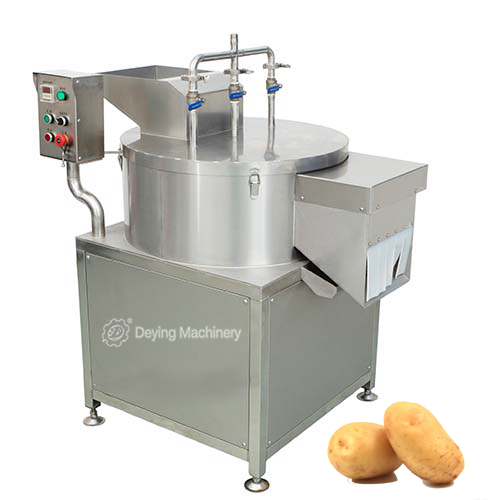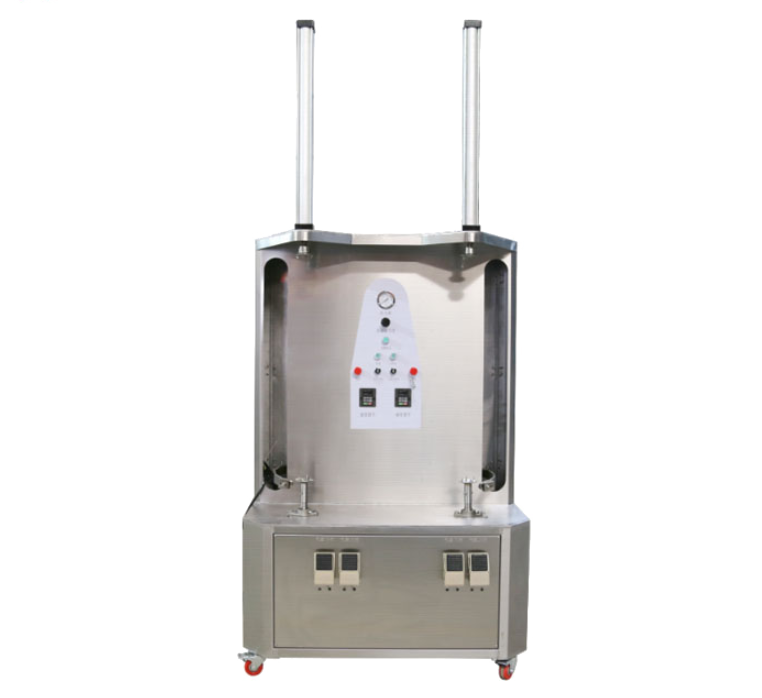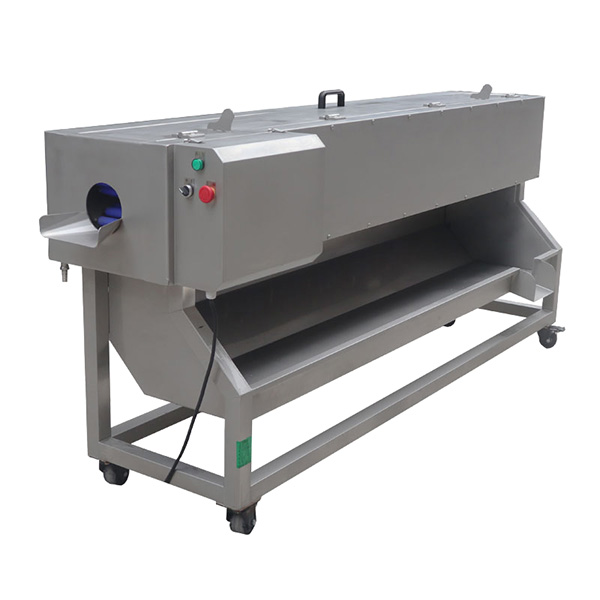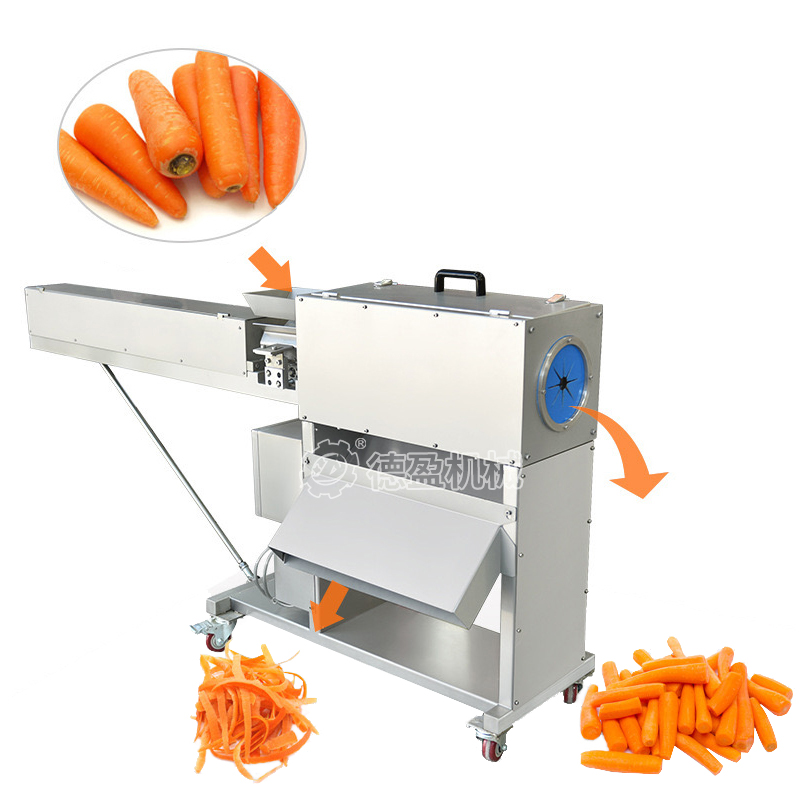
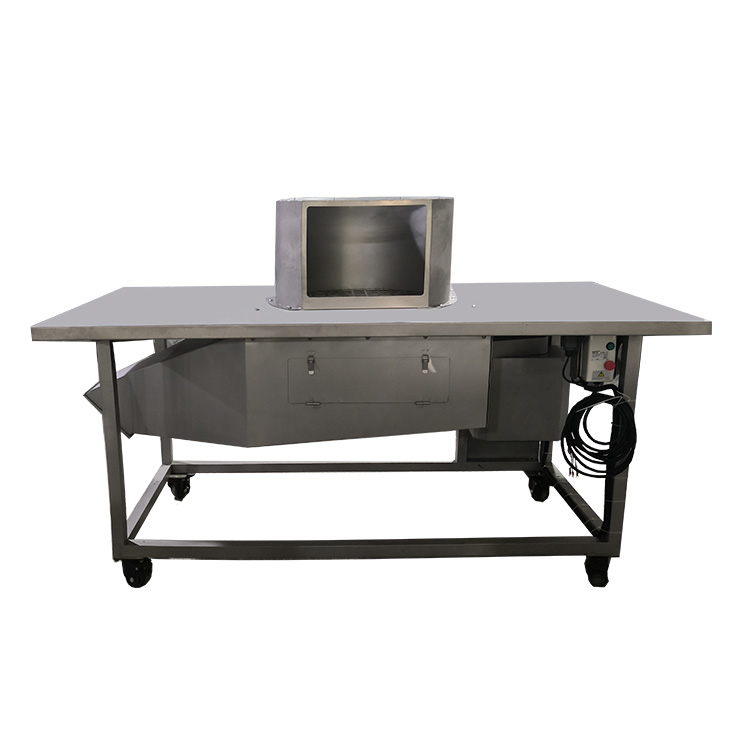






Celery Defoliator is a device specially designed for removing celery leaves, which is widely used in food processing and agriculture. It can efficiently and quickly remove excess leaves from celery stalks to prepare them for subsequent washing, cutting or packaging processes. Using Celery Defoliator can significantly reduce manual operation time, improve production efficiency, and ensure that celery stalks are clean and tidy and meet food processing standards.
| Technical Parameters: | |
| Overall dimensions: | 1900*800*1300mm |
| Voltage: | 380V |
| Power: | 1.5kW |
| Production: | 400-500kg/h |
| Weight: | 200kg |
| Leaf removal rate: | 90% |
Usage process:
1. Empty load test machine: Place the machine on a level and solid ground, ensuring that all four feet are stable. Check if the power supply voltage matches, confirm that all fasteners are not loose, and that there are no foreign objects in the processing area and tool group. After connecting the power, turn on the switch and let the device idle for 1-2 minutes. Listen carefully for any abnormal noises or friction sounds, and confirm that the blade assembly is running smoothly without any abnormal noises.
2. Leaf removal process: After the no-load test is normal, the operation can begin. The operator holds celery and places its tender shoots or leaves into the feeding port. The machine quickly removes celery leaves through the suction and shear forces generated by rotating the impeller. The entire process requires manual assistance for feeding, which is efficient and convenient.
3. Vegetable leaf separation: After leaf removal, the celery rhizome and vegetable leaves are separated by using a fan to form negative pressure adsorption on the leaves, which is combined with cutting components; The separated celery leaves can be collected separately, while the stems can be directly removed after cutting.
Equipment features:
The celery leaf removal machine adopts a specially designed rotating impeller blade group for leaf removal, with a leaf removal rate of over 90% and a stem damage rate as low as 2%. The efficiency is 3-5 times that of manual labor; The whole machine is made of food grade 304 stainless steel material, which is hygienic, easy to clean, compact in structure, and occupies a small area; Suitable for various leafy vegetables such as celery and parsley, easy to operate, widely used in vegetable distribution, food processing, and catering schools.
Feature:
Material: The whole machine is made of food grade SUS304 stainless steel, which fully complies with the national food industry hygiene standards and export requirements. The whole machine is corrosion-resistant and easy to clean, effectively avoiding secondary pollution of materials and ensuring safe and hygienic processing
Advanced Leaf Removal Technology: The equipment adopts a specially designed rotating blade group combined with a fan blowing system design, driven by a driving motor to rotate the rotating shaft, so that the blades on the blade group can quickly cut and peel off the celery leaves. At the same time, the wind generated by the fan assists in separating the peeled leaves from the stems. The separation rate of stems and leaves can reach over 90%, with a stem damage rate as low as 2%, and the efficiency is 3-5 times that of manual labor.
Diverse specifications: The conventional defoliant can produce up to 400-500 kilograms per hour and can handle celery, coriander, lettuce, etc; Customization can also be made according to specific needs. Meet the needs of different scale scenarios such as central kitchens, vegetable processing centers, and food factories.
Safety certification: The equipment has passed CE certification, ISO9001 quality management system, patents and other certifications, and is popular in Europe, Europe, America, Asia, Southeast Asia and other countries.
Universality and durability
Material quality: In addition to standard components such as motors and bearings, the equipment is mainly made of food grade SUS304 stainless steel, with a main board thickness of 3mm and support legs made of stainless steel square tubes. The whole machine is corrosion-resistant and easy to clean, fully complying with national food industry hygiene standards and export requirements, ensuring safe, hygienic, and durable processing.
Multi material compatibility: The equipment is not only suitable for removing leaves from leafy vegetables such as celery and parsley, but also compatible with processing various leafy vegetables such as coriander. By using a rotating knife set in conjunction with a fan system, rapid cutting and peeling of vegetables of different varieties and thicknesses can be achieved, making the machine versatile and meeting diverse processing needs.
Modular design: The equipment adopts a modular structure design, with core components such as the rotating blade group, motor drive system, fan separation system, and protective plate all being independent modules, making disassembly and assembly convenient. Each module can be disassembled, maintained, replaced, or upgraded separately. The inner cavity protective plate is designed with a quick opening mechanism, which facilitates daily cleaning, reduces maintenance costs, and extends the overall service life of the equipment.
Simplify the operational process
Connect the power supply, conduct a no-load test to confirm normal operation and no abnormal noise before feeding. The operator holds celery and places the leaf part into the feeding port. The rotating knife group, together with the fan system, automatically completes leaf removal cutting and stem leaf separation. The stem after leaf removal is directly taken out from the discharging port, and the leaves fall into the collection box. Easy to operate, one person can easily complete it.
Suitable for various processing industries
Clean vegetable processing and vegetable distribution center: This equipment is the core of clean vegetable processing and vegetable distribution enterprises. Faced with large quantities of celery, it can quickly complete the leaf removal process, with efficiency far exceeding manual labor, ensuring uniform specifications and hygiene standards for clean vegetable products, and meeting the supply needs of supermarkets and e-commerce platforms.
Central Kitchen and Large Cafeteria: Central kitchens, school and enterprise canteens require the handling of large amounts of food ingredients. This device can efficiently complete celery pretreatment, greatly saving manpower and ensuring the timeliness of food supply, making it an ideal choice to improve the production efficiency of group meals.
Catering hotels and kitchens: Hotel and restaurant kitchens have high requirements for food processing efficiency and standardization. This device can quickly complete leaf removal work, ensuring fresh and beautiful ingredients, and improving dish efficiency. Especially suitable for large-scale catering formats such as tea restaurants, coffee shops, and Western cuisine.
Specialized Scenarios
Food processing enterprises: Removing celery leaves is an important step in food factories that produce dumplings, baozi fillings, vegetable juices, dehydrated vegetables, and other products. This device can efficiently and stably provide deforested celery stems, ensuring the quality and production capacity of subsequent processing.
Vegetable planting bases and cooperatives: For vegetable planting bases and cooperatives, a large amount of celery needs to be quickly processed after harvesting. The use of leaf removal machines can significantly improve postpartum processing efficiency, reduce losses and labor costs, make commercial processing more standardized, and thus enhance the commodity value and market competitiveness of vegetables.
Frequently Asked Questions
How to solve the problem of unclean leaf removal or damaged stem of coriander leaf removal machine?
Blunt blade or improper rotation speed; Uneven thickness of raw materials leads to unstable processing effects. Timely grinding or replacement of blades is required; Adjust the rotation speed and feeding speed of the blade group according to the thickness of the celery variety; Raw materials with significant differences in size can be classified before processing.
How to solve the problem of material jamming and poor operation during the operation of the celery leaf removal machine?
Excessive and forceful one-time feeding can cause material blockage; The knife group or rotating parts are wrapped with vegetable leaves and other debris. Continuous and uniform feeding methods are required to avoid excessive feeding; Immediately stop the machine and cut off the power when stuck, clean the debris wrapped in the blade group and chamber, and then restart.
Maintenance method:
Daily maintenance: After each shift, the power must be cut off and the protective board must be opened after the equipment has completely stopped. Use high-pressure water guns or food grade cleaning agents to clean the rotating blade group, fan blades, and the inside and outside of the machine body, thoroughly removing vegetable leaf residue and juice residue, with a focus on cleaning the entanglement in the gaps of the blade group. After cleaning, check for any obvious defects or looseness in the blades, confirm that all fasteners have not fallen off, and wipe the surface of the machine with a dry cloth to keep the equipment dry and clean.
Weekly maintenance: Conduct a comprehensive inspection once a week. Check whether each blade of the rotating knife group is sharp, and if there is obvious dullness or chipping, it should be promptly ground or replaced; Check if the fan blades are deformed to ensure smooth operation without any abnormal noise; Check the bearings of each rotating component and replenish food grade lubricating oil in a timely manner; Clean the dust and equipment dead angle deposits on the motor heat sink; Check the sealing and locking device of the quick opening guard to ensure it is securely closed during operation.
Monthly maintenance: Conduct systematic maintenance once a month. Conduct a comprehensive inspection of all fastening bolts and connectors, and tighten them promptly if any looseness is found; Check for aging or poor contact of power cords and electrical components; Check the overall wear of the rotating blade assembly and evaluate whether it needs to be replaced as a whole; Clean the oil and dirt on the bottom shock pad and frame of the equipment; Thoroughly clean and apply rust proof oil for protection before long-term use.
Safety Reminder
Do not open the cover or reach inside the machine during operation.
If there is a jamming, power off first and then handle it.
Why Choose Deying Machinery?
-Factory-Direct: Integrated manufacturing & trading for efficient, direct communication.
-Custom Solutions: Tailored processing equipment to meet your specific production needs.
-Global Network: Supported by worldwide distributors for seamless after-sales service.
-Learn more about us:https://www.dyfoodmachines.com/about-us/

Dongguan De Ying food machinery Co., LTD


Copyright © 2026 Dongguan Deying Food Machinery Co., Ltd All rights reserved.