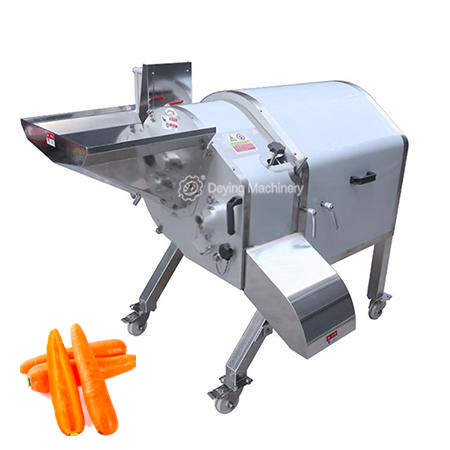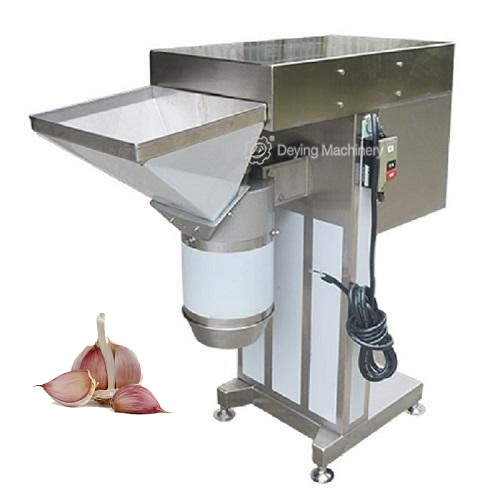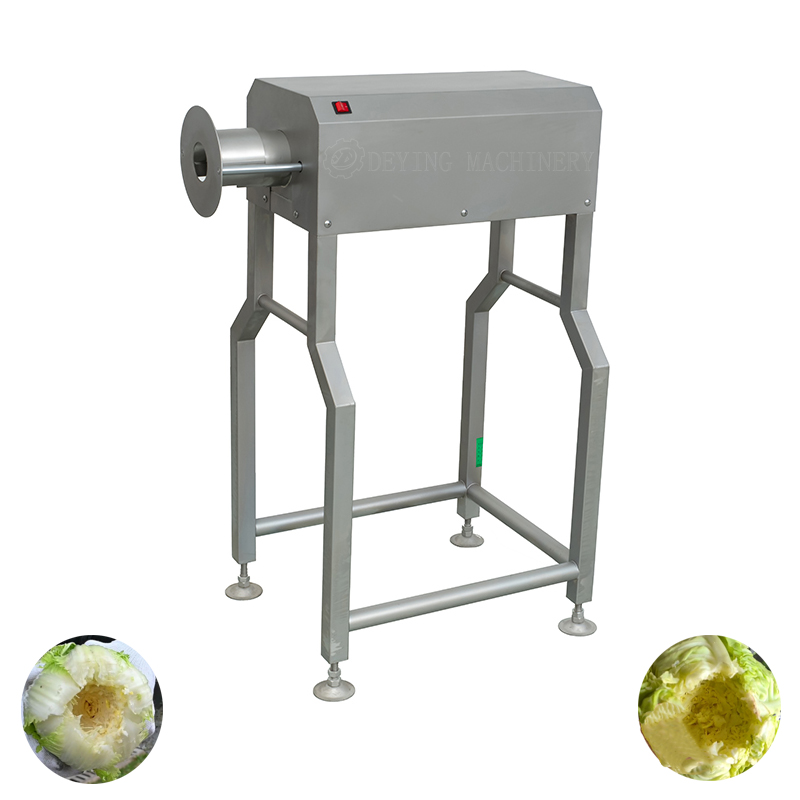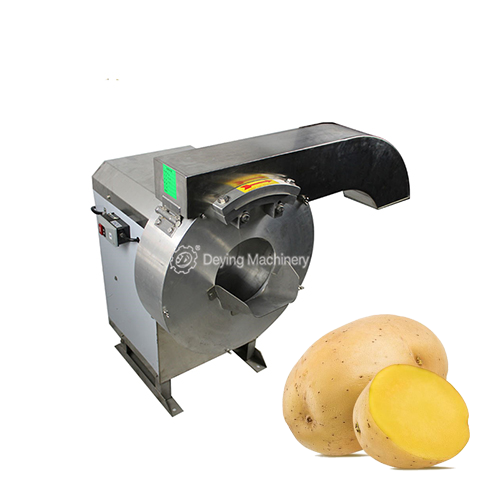
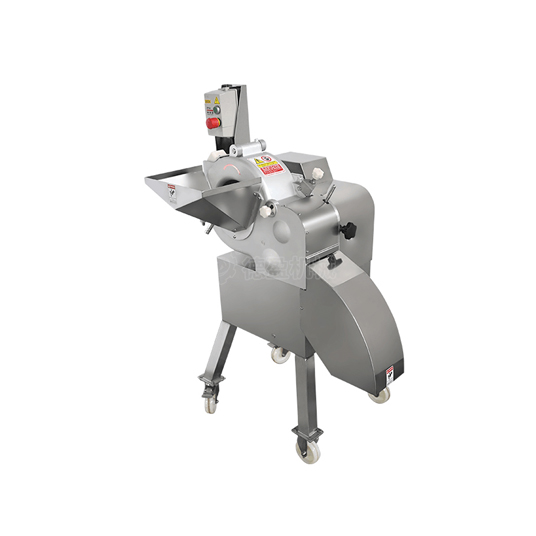
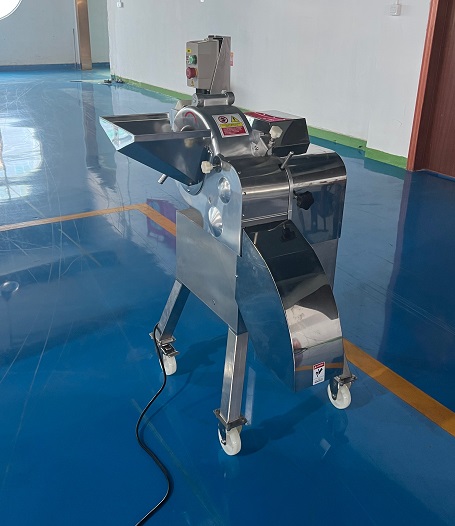
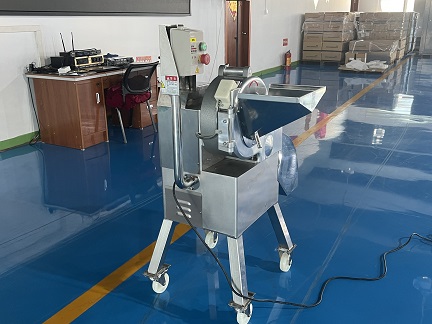
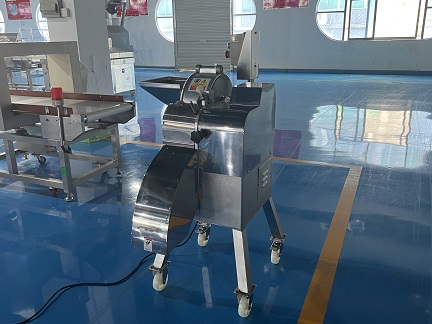
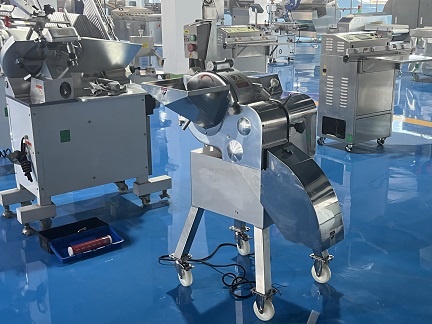






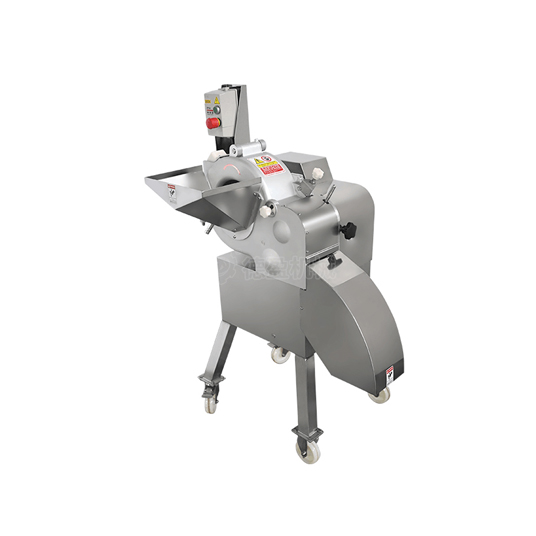
Usage: Commercial cutting machine can cut vegetables and fruits into small pieces at once. Common cutting materials include carrots, potatoes, onions, winter melon, pineapple, apples, etc.
Features: The material has a smooth and beautiful cutting surface; The machine frame is made of SUS304 stainless steel, which is corrosion-resistant; There is a micro switch at the feeding port for safe operation; Fast cutting speed and high yield; The cutting specifications are optional to meet the cutting requirements of different materials.
| Technical Parameters: | |
| Overall dimensions: | 760×1000×1280mm |
| Voltage: | 380V |
| Power: | 0.75kW |
| Production: | 500-800kg/h |
| Cutting size: | 3-20mm, optional but not adjustable |
| Machine weight: | 100kg |
| Customization: | customizable |
Usage process:
1. No load test machine: Before starting, check that there are no debris in the blade group and hopper. Make sure the power supply is 380V (customized for special voltages), turn on the power, press the start switch, and let the machine idle for 1-2 minutes. Listen carefully for any abnormal noise or friction sound, and confirm that the internal cutterhead is running smoothly. Use a small amount of material to test cut and verify whether the block specifications meet the processing requirements.
2. Uniform feeding: After the machine runs smoothly, clean and peeled root vegetables (such as potatoes, white radishes, carrots, etc.) are continuously and uniformly fed from the upper feeding port. Large chunks of food should be cut into blocks that match the feeding port, and be careful not to add too much at once, which may cause jamming.
3. Automatic discharge: After entering the material bin, the material will be cut into regular blocks at high speed under the action of centrifugal force. The cut vegetable cubes will naturally slide into the receiving bucket through the discharge chute, and the splash guard can reduce scattering. When processing high moisture vegetables such as tomatoes and cucumbers, it is necessary to regularly check for juice accumulation or fiber adhesion at the discharge outlet, and if necessary, pause cleaning the cutterhead and groove wall. Please make sure to place the material receiving frame or conveyor belt below the discharge port in advance.
Equipment features:
The vegetable slicer adopts the principle of centrifugal cutting to achieve one-time molding, cube standardization, minimal waste, and high yield of finished products; The feeding port is equipped with a micro switch and a safety sensing device for opening and closing the lid, and the waterproof switch can be activated with one click; The hourly output can reach 500-800kg/h; Suitable for cutting various rhizomes and fruits and vegetables, one machine can save about 15 manual labor in the same time, greatly improving production efficiency. Easy to operate, easy to clean, and customizable cutting specifications.
Feature:
Material: The 3D cutting machine is made of high-quality 304 stainless steel. It has strong corrosion resistance and rust prevention ability, with a smooth and easy to clean surface. The equipment can operate stably in humid environments for a long time. Fully compliant with international food hygiene and safety standards, durable and easy to rinse.
Advanced centrifugal cutting technology: using the principle of centrifugal cutting, the material is spun out by a high-speed rotating blade and instantly completed into three-dimensional cutting with a fixed blade. Smooth cutting without squeezing, reducing juice loss, regular shape, and smooth surface.
Diverse specifications: The cutting size of the equipment can be customized according to the processing requirements. Cutting different materials requires reference to the material characteristics or cutting size to replace different cutter heads. Adapt to various food processing needs.
Security certification: The device has passed CE certification and is popular in various countries such as Europe, America, Southeast Asia, and Asia.
Universality and durability
Rack and transmission system: The whole machine is supported by a SUS304 stainless steel frame and equipped with a dual motor reducer. It is driven by gears and chains, with high cutting power and impact resistance, ensuring safe operation and meeting food grade hygiene standards.
Feeding mechanism: Root and stem vegetables are designed with a feeding box, which is automatically conveyed through the cooperation of rollers.
Cutting tool system: The material is centrifuged and thrown out by a high-speed rotating cutter head, and the fixed blade is used to instantly complete three-dimensional cutting. The cutter set is fixed by a double-sided support frame, which is easy to disassemble and meet diverse production needs, and is convenient for maintenance and cleaning.
Simplify the operational process
The machine has a one key start switch, a safety emergency stop button, and a micro switch at the feeding port. The hopper can only be started after it is closed. One person can operate one machine without the need for professional training or complex processes, directly achieving the operation of starting up and processing.
Suitable for various processing industries
Vegetable processing factory: batch processing of carrots, potatoes, onions, etc. for group meals and student nutrition meal distribution, ensuring finished product output while reducing labor costs.
Quick frozen food processing plant: Cut and freeze vegetables (such as green beans, corn, and diced radish), used for quick freezing mixed vegetable packages, in compliance with hygiene and efficiency standards.
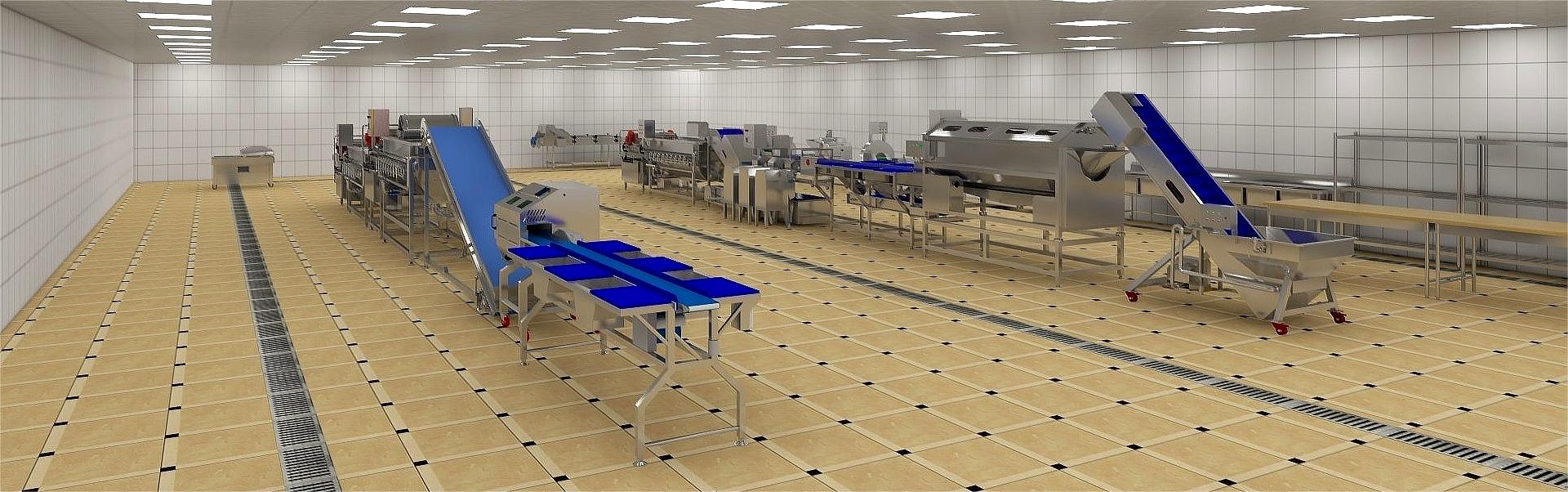
Food processing plants and clean vegetable processing: places such as group meals, food processing plants, and clean vegetable distribution centers can efficiently process various fruits, vegetables, and meat ingredients, ensuring meal efficiency and product quality, and meeting standardized production needs. At the same time, the 3D diced machine is also suitable for frozen food processing plants, dehydrated vegetable plants, canned food, dumplings and other food industries. It can process a large amount of frozen vegetables, fruits and other diced needs, improving the efficiency of food processing.
Installation and Debugging
Site placement and assembly inspection: Place the machine on a level and hard surface to ensure that the body is stable and free from shaking. Check all fasteners for looseness and the switch power cord for damage. Clean the debris on the rotating drum to prevent damage to the blade assembly during startup.
Power connection and no-load test: Confirm that the voltage is three-phase 380V, and have a professional electrician connect the power line to the circuit with a full disconnect switch. The machine body should be reliably grounded. Close the switch and jog to check if the steering is correct (clockwise/counterclockwise). Run idle for 10-20 seconds, monitor for any abnormal noise or vibration, confirm smooth operation before adding materials.
Frequently Asked Questions
How to solve the problem of uneven cutting, continuous cutting and rough cutting surface of vegetable 3D slicer?
Reason: Tool wear or blunting of the blade edge, residue at the blade assembly, or deformation caused by the nature of the raw materials (such as soft high moisture vegetables like green peppers and cucumbers) during compression. Solution: Check and replace worn cutting tools, regularly clean the clearance residue of the tool group, and keep the cutting edge sharp; Slow down the pushing speed of soft fruits and vegetables appropriately. After refrigerating the raw materials, it is recommended to let them stand at room temperature for a slight balance before starting the machine
How to solve the abnormal noise or vibration during the operation of the fruit and vegetable slicer?
Reason: Loose components, improperly installed cutterhead, damaged shaft, worn bearings, or foreign objects entering the cutting area. Solution: Check and tighten the screws of the base and shell; Clean up foreign objects in the cutting area; If the cutterhead makes abnormal noise, reinstall the cutterhead or add a shim between the two discs; Axis or bearing damage requires replacement of corresponding components
Maintenance method:
Daily maintenance: After daily use, clean the machine's inlet, processing area, outlet, etc. with water.
Monthly maintenance:
All moving parts of mechanical components must be kept lubricated.
All chains, sprockets, gears, gear racks, and other rotating components should be regularly lubricated with oil or butter.
All axis rotation joints should be regularly lubricated with oil.
It is recommended to check the fixing screws of the cutterhead every two weeks for looseness, wear or passivation of the cutterhead. If the cutting efficiency decreases or the cutting is uneven, the blade should be ground or replaced in a timely manner.
Safety Reminder
Do not open the cover or reach inside the machine during operation.
If there is a jamming, power off first and then handle it.
When cleaning the multifunctional slicer, be careful to avoid the position of the motor and electrical box.
Why Choose Deying Machinery?
-Factory-Direct: Integrated manufacturing & trading for efficient, direct communication.
-Custom Solutions: Tailored processing equipment to meet your specific production needs.
-Global Network: Supported by worldwide distributors for seamless after-sales service.
-Learn more about us:https://www.dyfoodmachines.com/about-us/

Dongguan De Ying food machinery Co., LTD


Copyright © 2026 Dongguan Deying Food Machinery Co., Ltd All rights reserved.


 PDF
PDF