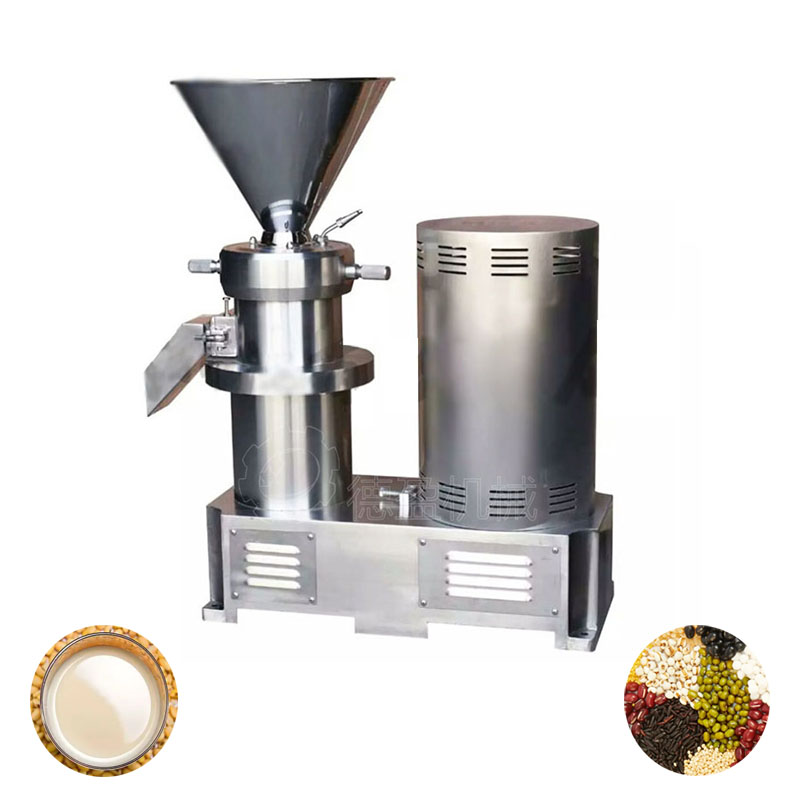
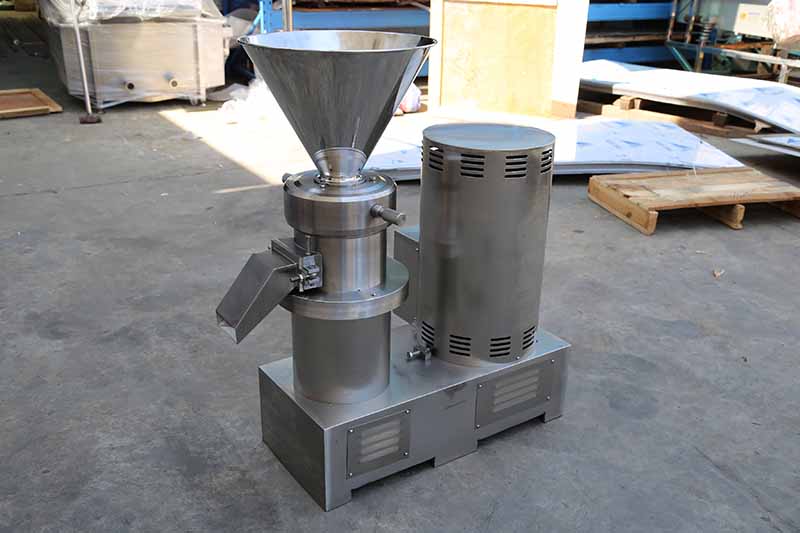
The colloid mill grinder is primarily used for wet ultrafine grinding, homogenization, emulsification, dispersion, and milling. Through the high-speed relative motion of the rotor and stator, it generates strong shear forces and impacts, which refine the material down to the micrometer level, enabling the mixing, emulsification, and refinement of the material.
It is suitable for various industry scenarios:
1. Food industry: used for processing jam, juice, dairy products, soy products, sauces (such as peanut butter, sesame paste, soybean paste), minced meat, meatballs, etc., to enhance texture fineness and stability;
2. Pharmaceutical industry: used for grinding herbal extracts, ointments, and other medicinal substances, as well as pharmaceutical granules, to facilitate absorption;
3. Cosmetics industry: used for manufacturing creams, lotions, shampoos, toothpaste, etc., to achieve uniform emulsification of ingredients and improve product texture.
The colloid mill must operate in a liquid medium (such as water, the juice of the material itself, etc.) and cannot be used for drying material processing. The specific operation methods are as follows:
1. Feeding: The fluid or semi-fluid material (or a mixture of solid and liquid, where the solid needs to be pre-broken to an appropriate particle size) to be processed is fed into the gap between the rotor and the stator of the colloid mill through the feeding port;
2. Grinding and processing: The rotor rotates at high speed (the speed can typically reach several thousand revolutions per minute), creating intense relative motion with the stationary stator, which generates strong shear forces, mechanical impacts, and turbulent cavitation effects, resulting in the refinement, emulsification, and dispersion of the material particles.
3. Output: The ground material is expelled from the gap between the rotor and the stator under pressure, completing the initial processing. If a finer particle size is required, the output can be reintroduced into the feeding port for multiple cycles of grinding.
The colloid mill grinder’s precise micron-level grinding capabilities, multi-functional integration advantages, broad industry compatibility, ease of operation and maintenance, completely address the pain points of traditional processing equipment, such as low efficiency, unstable quality, and poor adaptability.If you have any questions about this machine or other food processing equipment, please let me know, and we will provide you with professional answers!

Dongguan De Ying food machinery Co., LTD


Copyright © 2026 Dongguan Deying Food Machinery Co., Ltd All rights reserved.