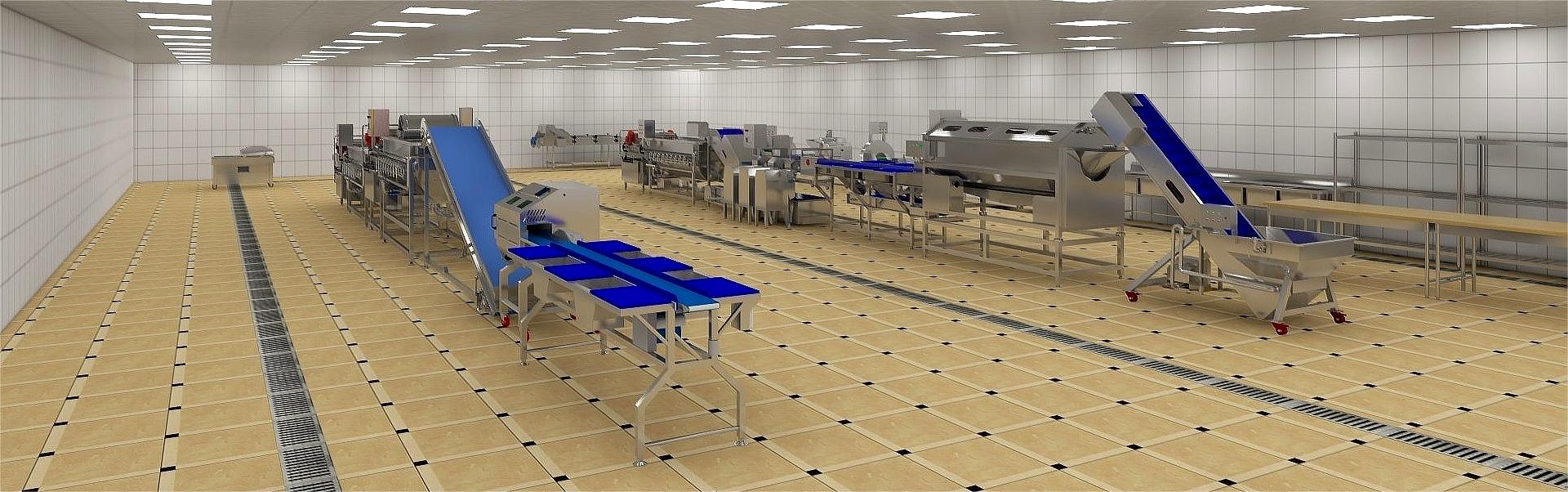
An onion peeler machine is an automated food processing equipment designed to efficiently remove the outer skin of onions, catering to commercial and industrial-scale applications. Below is a detailed analysis of its key features, technical specifications, applications, and purchasing considerations.
Key Features
High-Efficiency Peeling Technology
Dry/Pneumatic Peeling: Utilizes compressed air to create a cyclone effect, stripping onion skins without soaking or chemical treatments, reducing water waste and contamination risks.
High Peeling Rate: Advanced models achieve ≥95% peeling completion while minimizing onion damage (e.g., Lonkia models).
Adjustable Peeling Depth: Equipped with "onion skin controllers" to customize peeling layers for different processing needs (e.g., removing only dry outer layers or multiple layers).
Durable & Hygienic Design
Full Stainless Steel Construction: Made of food-grade SUS304 stainless steel for corrosion resistance and easy cleaning, complying with international hygiene standards (e.g., Lonkia, KW-YCTP10).
Modular Structure: Some models (e.g., USM-S100) feature a single-layer operation platform for simplified maintenance and adjustments.
Smart Automation
Automatic Size Recognition: Premium models (e.g., WM Machinery’s fully automatic units) include "onion size detection systems" to adjust root-cutting dimensions based on onion size, integrating peeling and root trimming.
Digital Control Panels: Support parameter settings and real-time monitoring for precise operation (e.g., USM-S100).
Applications
Food Processing Factories: Mass production of diced onions, onion rings, or other pre-processed products requiring high efficiency and low waste.
Central Kitchens: Standardized onion preparation for restaurant chains to reduce labor costs.
Vegetable Processing Enterprises: Handling export-grade onions to meet international hygiene and quality standards.
Agricultural Cooperatives: Preliminary sorting and peeling of harvested onions to enhance added value.