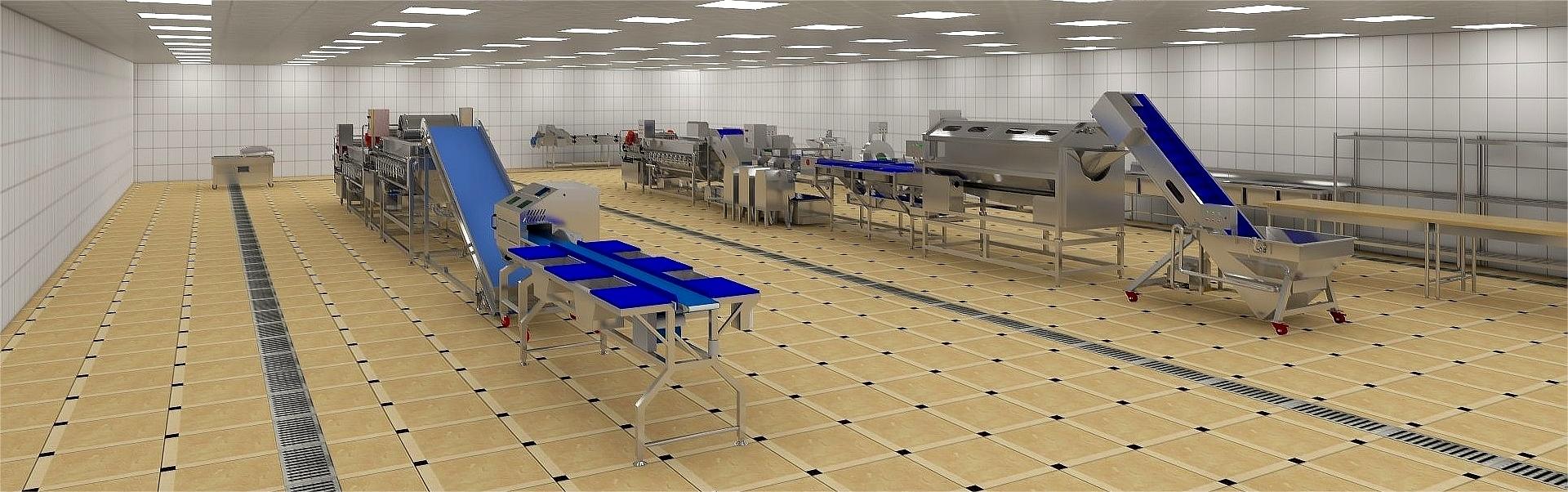
Investing in a Lettuce Production Line is an important decision for vegetable processing factories, fresh-cut salad manufacturers, and foodservice suppliers. The right equipment configuration can help improve production efficiency, optimize labor allocation, and maintain consistent processing results.
However, not every lettuce processing line is suitable for every business. Production capacity, raw material characteristics, processing requirements, factory space, and automation levels all influence equipment selection.
This guide explains the key factors buyers should evaluate before purchasing an industrial Lettuce Production Line.
1. Define Your Lettuce Processing Requirements
Before comparing equipment suppliers, determine what type of lettuce products your factory intends to produce. Different finished products require different processing procedures.
Whole Washed Lettuce: Requires suitable washing, inspection, and handling equipment.
Cut Lettuce: Requires washing and cutting equipment, followed by appropriate dewatering and packaging processes.
Fresh-Cut Salad Ingredients: May require additional sorting, cutting, dewatering, inspection, and packaging stages.
Commercial Foodservice Products: Processing configurations should match the required portion sizes, packaging formats, and delivery schedules.
Clearly defining the finished product helps determine which machines are necessary and which processes can be integrated into the production line.
2. Select the Right Processing Capacity
Production capacity is one of the most important considerations when choosing a lettuce processing line. An undersized line may limit output, while excessive capacity can increase equipment investment and operating costs.
When evaluating capacity, consider the following factors:
Expected raw lettuce input per hour or per day.
Number of production shifts.
Seasonal changes in raw material supply.
Expected future production expansion.
Processing efficiency and product yield.
Buyers should also confirm whether the supplier's stated capacity refers to raw material input or finished product output. These figures are not necessarily the same.
3. Evaluate the Main Processing Equipment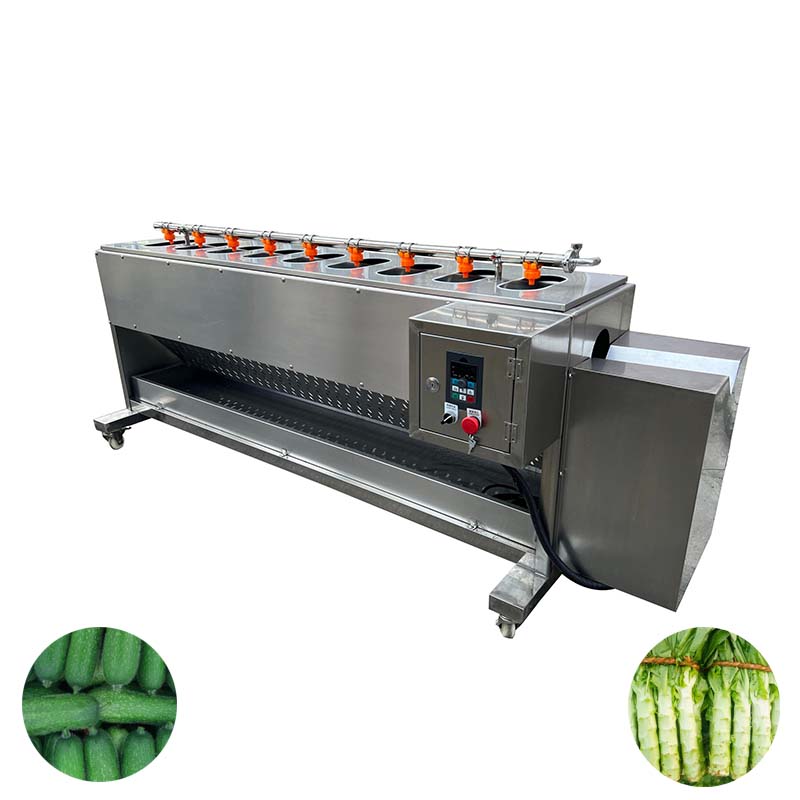
A complete lettuce production line usually includes several machines. Each machine should be selected according to its processing function and compatibility with the other equipment.
Lettuce Washing Machine
Washing equipment removes soil and other surface impurities from fresh lettuce. Buyers should evaluate washing methods, water circulation, filtration options, loading capacity, and cleaning convenience.
For continuous production, the washing machine should be able to match the feeding speed and downstream processing capacity.
Vegetable Cutting Machine
If the factory produces cut lettuce or salad ingredients, cutting equipment is essential. Important considerations include adjustable cutting sizes, blade design, processing speed, and the ability to handle delicate leafy vegetables.
Buyers should request sample processing to evaluate the cutting result and the condition of the finished lettuce.
Lettuce Dewatering Machine
Dewatering equipment removes excess surface water after washing. Centrifugal vegetable dewatering machines are commonly used for this purpose.
When selecting a dewatering machine, consider basket capacity, operating speed, processing time, and how gently it handles lettuce leaves. The equipment should achieve the required moisture removal without causing unnecessary product damage.
Conveyors and Packaging Equipment
Conveyors connect different processing stages and help reduce manual material transfer. Packaging machines are selected according to the final package type, product weight, sealing method, and production requirements.
These supporting machines are important when planning a coordinated lettuce processing line rather than purchasing individual machines separately.
4. Consider the Level of Automation
Automation can improve workflow coordination and reduce repetitive manual operations. However, the appropriate automation level depends on production scale, investment budget, and the factory's operating model.
Semi-Automatic Production Lines may combine mechanical washing, cutting, or dewatering with manual sorting and material transfer. They can be suitable for smaller operations or factories with more flexible production requirements.
Automatic Lettuce Processing Lines integrate multiple machines through conveyors and coordinated controls. They are suitable for businesses seeking more continuous processing and reduced manual handling.
When comparing automation solutions, buyers should evaluate the actual labor requirements, operating procedures, equipment coordination, and maintenance needs rather than focusing only on the number of automated machines.
5. Check Hygiene Design and Food-Contact Materials
Hygiene is a critical factor in lettuce processing because the product is often supplied as a fresh or minimally processed vegetable.
Before purchasing equipment, ask the supplier about:
Materials used for food-contact surfaces.
Ease of cleaning and disassembly.
Drainage and wastewater management.
Protection against water accumulation in equipment structures.
Access for routine inspection and maintenance.
Applicable food-contact material documentation and hygiene requirements.
Buyers should confirm that equipment materials and designs meet the food safety requirements applicable to their target market and production process.
6. Plan the Factory Layout and Workflow
A well-planned layout helps improve material movement and reduce unnecessary handling. The arrangement of feeding, washing, cutting, dewatering, inspection, and packaging equipment should follow the actual production sequence.
When planning the layout, consider:
Available floor space and ceiling height.
Raw material receiving and finished product handling areas.
Water supply and drainage locations.
Electrical connections and equipment operating space.
Cleaning and maintenance access.
Personnel movement and hygiene management zones.
For customized projects, providing the supplier with factory dimensions and a preliminary layout can help with equipment arrangement and production line planning.
7. Compare Suppliers Beyond Equipment Price
The purchase price is only one part of the total investment. Buyers should also evaluate the supplier's technical capabilities, equipment quality, project experience, and after-sales support.
Important questions to ask include:
Does the supplier have experience with lettuce and leafy vegetable processing?
Can the supplier recommend a suitable equipment configuration based on the required output?
Can the machines be integrated into an existing production line?
Are equipment materials and technical specifications clearly documented?
Can the supplier provide installation guidance and operator training?
Are spare parts and technical support available after delivery?
Can the supplier conduct sample processing or equipment testing before shipment?
Comparing these factors helps buyers evaluate the overall suitability of a supplier instead of making decisions based only on the initial quotation.
8. Common Mistakes to Avoid When Buying a Lettuce Production Line
Choosing Equipment Based Only on Maximum Capacity
A machine's maximum rated capacity does not always represent its actual output under your operating conditions. Confirm the capacity using your raw materials and required processing specifications.
Ignoring the Connection Between Machines
Even if individual machines perform well, mismatched processing speeds can create bottlenecks. Evaluate the capacity of the entire line and the material transfer process between machines.
Overlooking Cleaning and Maintenance
Equipment that is difficult to clean may increase maintenance time and complicate hygiene management. Ask for details about equipment structure, cleaning procedures, and routine maintenance requirements.
Failing to Consider Future Expansion
If your business expects to increase production, consider whether the initial layout and equipment configuration can accommodate additional processing capacity later.
Why Choose an Integrated Lettuce Processing Solution?
Purchasing individual machines from different suppliers may create challenges in equipment compatibility, production coordination, and technical communication.
An integrated lettuce processing solution can help coordinate the main processing stages, including washing, cutting, dewatering, conveying, and packaging. It also allows the equipment configuration to be planned around the factory's production capacity and available space.
For food processors handling multiple vegetables, discussing a broader vegetable processing solution may also help identify equipment that can support other products and production requirements.
Conclusion
Choosing the right lettuce production line requires a clear understanding of your finished products, raw material characteristics, target capacity, automation requirements, hygiene standards, and factory layout.
Rather than selecting machines independently, buyers should evaluate how the complete processing system works together. A properly configured line can help improve workflow efficiency, maintain consistent processing results, and support future production development.
When requesting a quotation, prepare your target output, lettuce type, processing requirements, factory layout, and packaging specifications. This information will help equipment suppliers recommend a more suitable lettuce processing solution for your business.