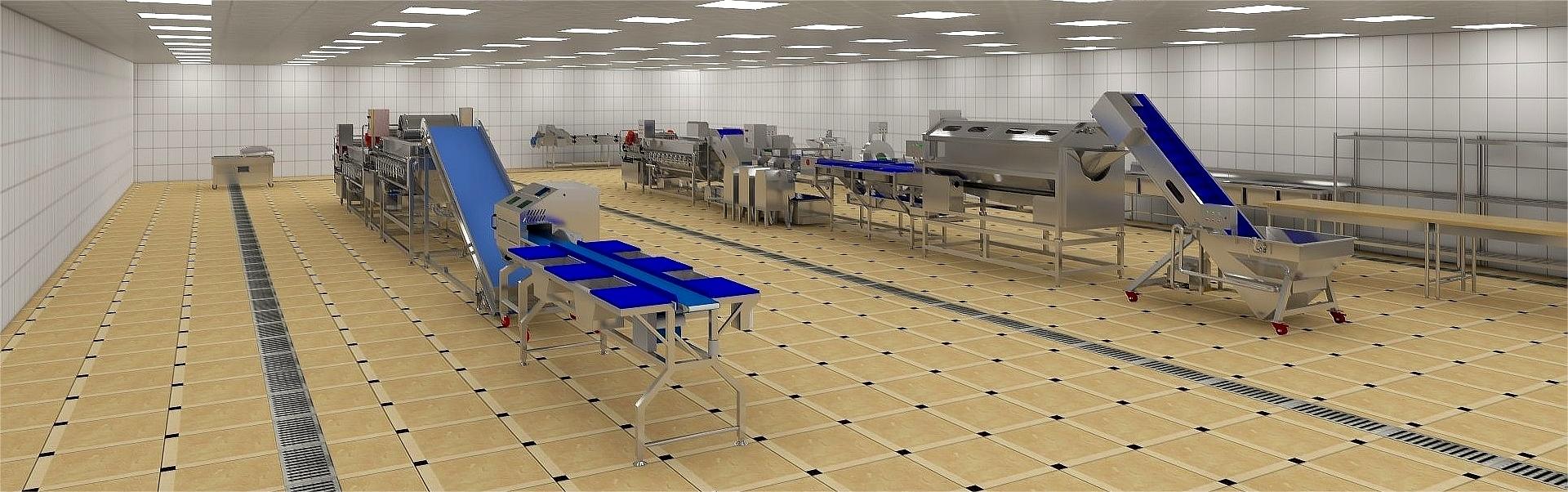
A potato chips processing line consists of machines that prepare raw potatoes, cut them into thin slices, cook them, and package the finished chips. For food manufacturers, selecting the right potato chips processing equipment is essential for maintaining consistent slice thickness, controlling processing conditions, and achieving the required production capacity.
A typical industrial potato chips production line includes a potato washing machine, peeling machine, sorting or trimming station, slicer, rinsing system, dewatering equipment, fryer or alternative cooking system, oil-removal equipment, seasoning machine, and packaging machine. The exact configuration depends on the product recipe, output target, and degree of automation.
1. Potato Washing Machine
A potato washing machine removes soil, sand, and other surface contaminants from raw potatoes before further processing. Depending on the machine design, cleaning may use water circulation, brushes, agitation, or a combination of these methods.
For commercial potato chips production, effective washing helps prepare raw materials for peeling and cutting. The washing system should be selected according to incoming potato quality, throughput, water consumption, and cleaning requirements.
2. Industrial Potato Peeling Machine
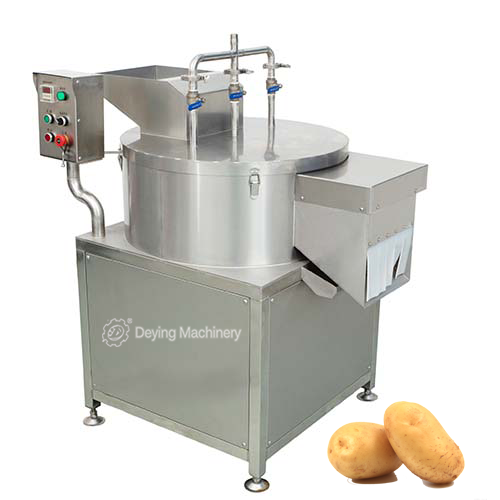
A Potato Peeling Machine removes the outer skin before the potatoes are sliced. Abrasive peeling machines are commonly used in food processing applications, although other peeling technologies may be suitable for particular production requirements.
Important selection factors include peeling efficiency, product loss, processing capacity, cleaning access, and the consistency of the incoming potatoes. Some facilities may also use a trimming or inspection station to remove remaining defects.
3. Potato Slicing Machine
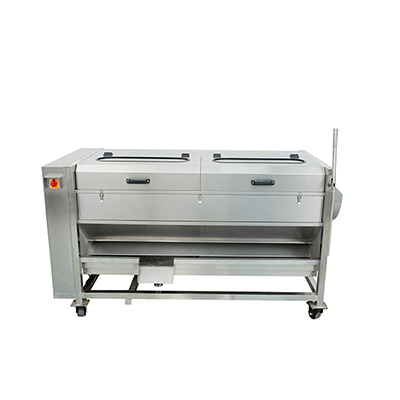
The slicing machine is one of the most important components of a potato chips processing line. It cuts peeled potatoes into thin slices of a specified thickness and shape.
Uniform slices help promote consistent cooking and finished product appearance. When selecting a commercial Potato Slicer, manufacturers should consider:
Adjustable slice thickness and cutting consistency.
Required processing capacity and feed rate.
Blade durability and replacement requirements.
Ease of cleaning and maintenance.
Compatibility with the intended potato varieties and product specifications.
The appropriate slice thickness depends on the target chip style and production recipe. Equipment trials may be useful when developing a new product.
4. Rinsing and Starch Removal System
After slicing, potato slices may pass through a rinsing system to remove excess surface starch and loose particles. This stage can help manage slice separation, surface condition, and final product characteristics.
The required rinsing method depends on the recipe and the desired chip texture. Water circulation, filtration, and wastewater management should also be considered when designing the line.
5. Dewatering Machine or Air Dryer
Rinsed potato slices carry surface water that may need to be removed before frying. A vibrating dewatering machine, centrifugal dewatering unit, or air-drying system can reduce excess moisture.
Proper dewatering helps improve frying stability and can reduce oil splashing. The choice of equipment depends on line capacity, available space, and the required moisture level before cooking.
6. Continuous Fryer
For conventional fried potato chips, an industrial fryer cooks the slices under controlled conditions. Continuous fryers are commonly used in larger production lines because they support a steady flow of product.
When evaluating a potato chips fryer, manufacturers should consider:
Required production capacity and product residence time.
Temperature control and heating method.
Oil circulation, filtration, and management.
Energy consumption and heat recovery options.
Cleaning, maintenance, and food safety requirements.
Frying temperature and time should be established through product trials and controlled according to the chip recipe, slice thickness, and desired texture and color. Alternative products, such as baked chips, may require a different cooking system instead of a conventional fryer.
7. Oil Removal and Cooling Equipment
After frying, potato chips may pass through a vibrating oil-removal conveyor or another suitable system to remove excess surface oil. Cooling equipment then helps bring the chips to an appropriate temperature before seasoning and packaging.
Careful product transfer is important because freshly cooked chips can be fragile. Conveyor design and handling speed should minimize breakage while maintaining the required throughput.
8. Seasoning Machine
A seasoning machine distributes salt, spices, and flavoring powders across the potato chips. Depending on the product and recipe, seasoning may take place in a rotating drum or another controlled mixing system.
Consistent seasoning distribution helps manufacturers maintain flavor uniformity between batches. The equipment should be compatible with the seasoning ingredients and easy to clean when changing flavors.
9. Weighing and Packaging Machine
The final stage typically uses a weighing and packaging system to portion the chips and seal them in suitable packaging. Depending on the sales format, manufacturers may choose automated weighing, bag filling, sealing, and date coding equipment.
Packaging selection should account for product fragility, moisture and oxygen protection, shelf-life requirements, package size, and distribution conditions. The packaging system should also match the required production speed.
Optional Equipment for a Potato Chips Production Line
Depending on the raw materials and factory requirements, a potato chips processing line may also include:
Raw potato grading machine: Separates potatoes by size or other measurable characteristics.
Inspection conveyor: Allows operators or vision systems to identify unsuitable potatoes or slices.
Oil filtration system: Helps remove food particles from frying oil and supports oil management.
Metal detector or other inspection equipment: Supports product quality and food safety programs when appropriate.
Automatic conveyor system: Connects individual machines and reduces manual product transfer.
Utility and wastewater systems: Support water supply, drainage, and other factory operating needs.
How to Choose the Right Potato Chips Processing Equipment
Define Your Target Production Capacity
Determine the required output per hour, shift, or day. The capacity of the washer, peeler, slicer, fryer, seasoning system, and packaging machine should be coordinated to prevent bottlenecks.
Consider the Finished Product Specifications
Chip thickness, shape, texture, flavor, and cooking method influence equipment selection. Conventional fried chips, kettle-style chips, and baked potato snacks may require different processing configurations.
Evaluate Automation and Labor Requirements
Automatic feeding, conveying, weighing, and packaging can reduce manual handling and support consistent production. The appropriate automation level depends on the factory's budget, staffing, and output targets.
Check Hygiene and Maintenance Requirements
Choose food processing equipment designed for appropriate cleaning and maintenance. Review food-contact materials, access to cleaning areas, spare parts availability, and the supplier's technical support.
Review Factory Space and Utilities
Before ordering equipment, assess the available floor area, production flow, drainage, water supply, power supply, ventilation, and heating requirements. A well-planned layout makes operation and maintenance more manageable.
Frequently Asked Questions
What is the main equipment in a potato chips processing line?
The main equipment usually includes a washing machine, peeling machine, potato slicer, rinsing system, dewatering unit, fryer or alternative cooking equipment, oil-removal system, seasoning machine, and packaging machine.
Can a potato chips processing line be customized?
Yes. A line can be configured according to production capacity, chip specifications, cooking method, automation level, factory layout, and packaging requirements. Some factories may also need additional sorting, inspection, or utility equipment.
What affects the capacity of a potato chips production line?
Capacity depends on the performance of individual machines, potato size and quality, slice thickness, cooking time, equipment transfer speed, and packaging speed. The overall output is generally limited by the stage with the lowest effective throughput.
Does a potato chips processing line always need a fryer?
No. A conventional fried potato chips line requires a fryer, but baked or other non-fried potato snack products may use different cooking equipment. The process should be selected according to the intended product and recipe.
Conclusion
A complete potato chips processing line combines raw potato preparation, slicing, pretreatment, cooking, seasoning, and packaging equipment. Each machine plays a role in maintaining production efficiency and finished product consistency.
Before purchasing equipment, food manufacturers should define the target output, chip specifications, cooking method, and automation requirements. Working with an experienced potato processing equipment manufacturer can help ensure that the equipment configuration fits the factory's production goals and operating conditions.