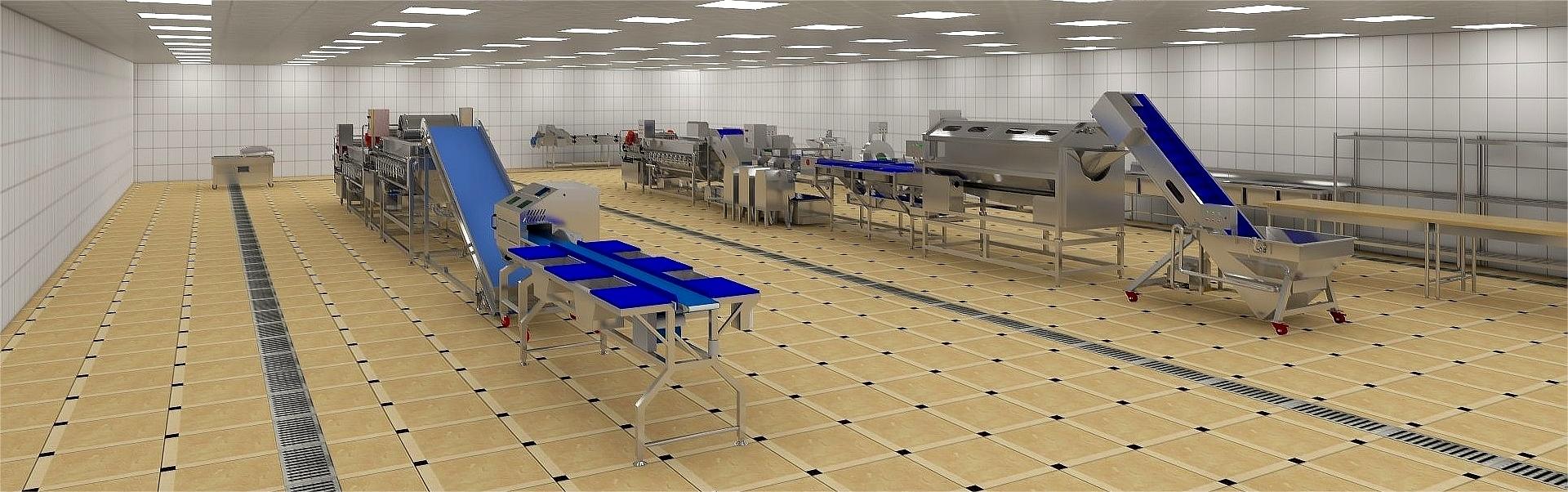
A Potato Processing Line is a series of machines designed to transform raw potatoes into finished or semi-finished products. Depending on the final product, the line may include washing, peeling, sorting, cutting, blanching, frying, cooling, freezing, and packaging equipment. An integrated Potato Processing Line helps food manufacturers improve production efficiency, maintain consistent product quality, and reduce manual handling.
The exact processing steps depend on whether the factory produces fresh-cut potatoes, frozen French fries, potato chips, or other potato-based products. Understanding how the line works is essential when planning equipment configurations for a food processing facility.
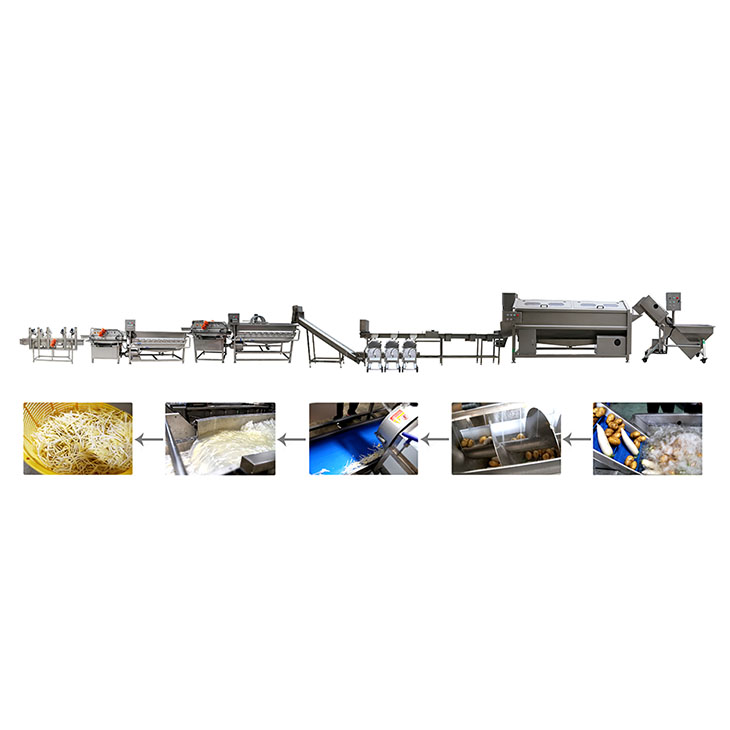
1. Raw Potato Receiving and Sorting
The process begins with receiving raw potatoes and inspecting them for size, quality, and visible defects. Potatoes may be sorted manually or by mechanical grading equipment to remove unsuitable materials and separate potatoes according to processing requirements.
Consistent raw material quality helps reduce waste during peeling and cutting. For large-scale production, automatic sorting and feeding systems can improve the stability of the entire processing line.
2. Potato Washing and Cleaning
Potatoes are washed to remove soil, sand, and other surface contaminants. Industrial potato washing machines typically use water, agitation, brushes, or a combination of cleaning methods to prepare the potatoes for subsequent processing.
Effective washing is important because remaining soil can affect product hygiene and interfere with peeling and cutting operations. The appropriate washing system depends on the condition of the raw potatoes, required throughput, and factory water management practices.
3. Potato Peeling
After washing, potatoes may pass through an industrial peeling machine. Depending on the equipment design, peeling can use abrasive surfaces, mechanical action, steam, or other suitable methods.
The objective is to remove the skin while minimizing the loss of edible potato flesh. Peeling performance depends on potato variety, size, skin condition, machine settings, and the required product specifications. Some products may require additional manual trimming or inspection.
4. Potato Cutting and Shaping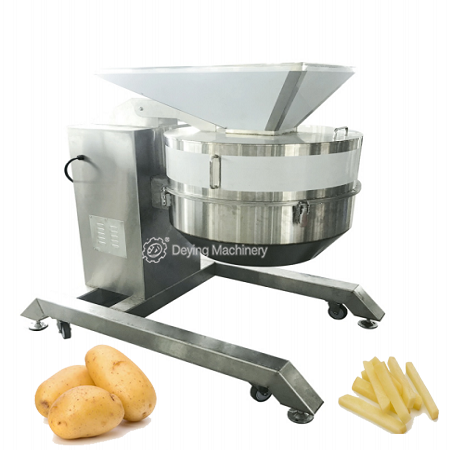
Once cleaned and peeled, potatoes are cut into the required shapes. A Potato Cutting Machine can produce slices, strips, cubes, or other forms according to the final product.
French fries: Potatoes are cut into uniform strips.
Potato chips: Potatoes are sliced into thin, consistent pieces.
Diced potatoes: Potatoes are cut into cubes for prepared foods and other applications.
Fresh-cut potatoes: Cutting specifications depend on the intended food product and customer requirements.
Consistent cutting dimensions support more uniform cooking and help manufacturers maintain product appearance and quality.
5. Blanching and Pretreatment
For many French fries and potato chip production processes, a pretreatment stage may be required. Blanching involves briefly heating cut potatoes in hot water or another controlled medium to support the desired product characteristics.
Depending on the product and recipe, blanching may help manage surface starch, improve color consistency, and prepare potatoes for subsequent frying or drying. Not every potato product requires the same pretreatment, so the process should be determined by the final product specifications.
6. Dewatering and Drying
After washing or blanching, excess surface water may need to be removed. Vibrating dewatering machines, air dryers, or other drying equipment can help prepare potato pieces for the next stage.
For fried products, controlling surface moisture can improve process stability and help reduce excessive oil splashing. The required drying method depends on the production line design and the product being manufactured.
7. Frying, Cooling, or Freezing
The next stage varies according to the product type.
French fries: Cut potatoes may be partially fried, cooled, frozen, and prepared for frozen food distribution. Some production lines use additional drying or coating steps.
Potato chips: Thin slices are typically fried or processed using another suitable cooking method, then drained and seasoned.
Fresh-cut potatoes: The process may focus on rinsing, draining, and packaging rather than frying.
Temperature, processing time, and product handling must be controlled according to the selected process and food safety requirements.
8. Seasoning and Packaging
For products such as potato chips, a seasoning machine can distribute salt, spices, or other flavorings over the cooked product. The finished potatoes are then transferred to packaging equipment.
Packaging options may include bags, trays, or other formats depending on the product, storage conditions, and distribution requirements. For frozen products, the packaging stage is designed to protect the product during storage and transportation.
What Determines the Configuration of a Potato Processing Line?
Not every factory needs the same equipment. A suitable potato processing line should be configured around the product, production target, and available facilities.
Final product: French fries, potato chips, diced potatoes, and fresh-cut potatoes require different processes.
Production capacity: The required output influences machine size, conveyor design, and the coordination of each processing stage.
Automation level: Automatic feeding, sorting, transfer, and packaging systems can reduce manual handling.
Factory layout: Equipment dimensions, material flow, drainage, utilities, and maintenance access should be considered during planning.
Food safety and hygiene: Equipment materials, cleaning access, and sanitary design should suit the intended food processing application.
Frequently Asked Questions
What are the main steps in a potato processing line?
The main steps commonly include receiving and sorting, washing, peeling, cutting, pretreatment, dewatering, cooking or freezing, and packaging. The exact sequence depends on the final product.
Can one potato processing line produce both French fries and potato chips?
Some upstream equipment, such as washing and peeling machines, may be shared. However, French fries and potato chips require different cutting, cooking, and finishing processes. A suitable configuration should be designed around the products and required output.
How do I choose the right potato processing line capacity?
Start with the target output per hour or per shift, the expected raw potato supply, and the finished product requirements. The capacity of each machine should be coordinated to avoid bottlenecks throughout the line.
Is an automatic potato processing line suitable for a small factory?
It can be, depending on the budget, output target, available space, and labor requirements. A smaller semi-automatic line may be more practical for some operations, while a higher-volume factory may benefit from more integrated automation.
Conclusion
A potato processing line converts raw potatoes into finished or semi-finished food products through a sequence of coordinated operations. From washing and peeling to cutting, cooking, and packaging, each stage contributes to product quality and production efficiency.
When selecting equipment, manufacturers should first define their target products, required capacity, and processing specifications. A properly configured line can help improve workflow, maintain consistent output, and support the long-term development of a potato processing business. Contact a professional potato processing equipment supplier to discuss a configuration tailored to your production needs.