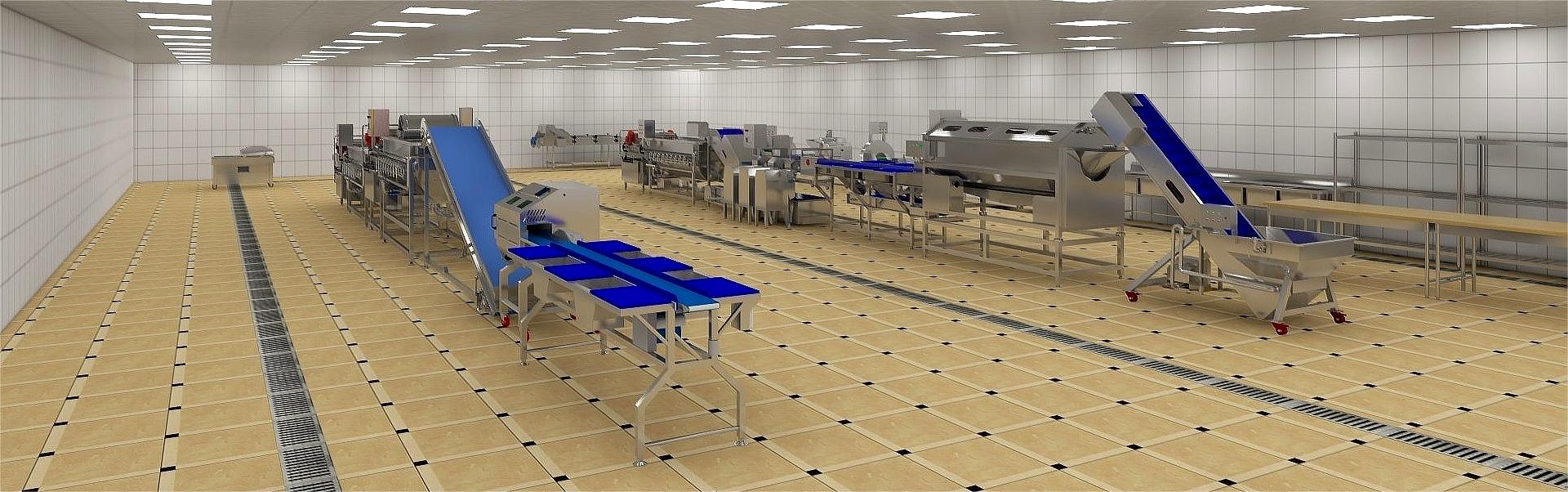
Buying food processing equipment is a major decision for food manufacturers because equipment performance can directly affect production capacity, product quality, labor efficiency, maintenance requirements, and operating costs.
Whether you are replacing an existing machine, expanding production, or setting up a new processing facility, it is important to evaluate more than the equipment's purchase price. The right machine should match your raw materials, production process, output requirements, factory conditions, and long-term business plans.
This guide explains the key factors to consider before purchasing food processing machinery.
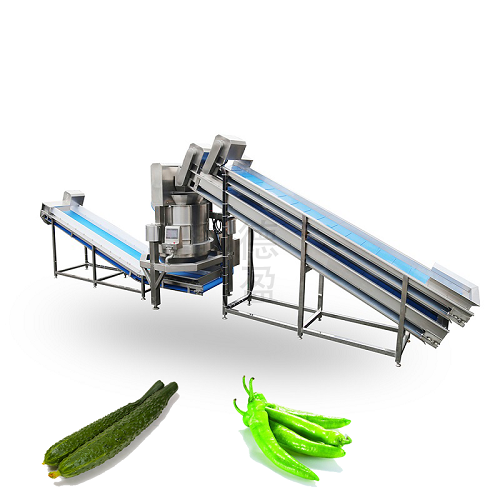
1. Define Your Processing Requirements
Before contacting a supplier, clearly define what the equipment needs to accomplish.
Start by identifying the product, raw material, processing method, expected output, and final product requirements.
For example, a machine used for washing vegetables has very different requirements from equipment used for grinding meat or dehydrating food products.
A clear processing requirement allows manufacturers to recommend equipment with the correct configuration.
2. Identify the Type of Equipment You Need
Food processing involves many different operations. Depending on the product, a production line may require washing, sorting, cutting, peeling, grinding, mixing, heating, drying, cooling, or packaging equipment.
Common categories include:
Food washing machines
Food sorting equipment
Food cutting and slicing machines
Food grinding machines
Food mixing equipment
Food cooking and heating equipment
Food drying and dehydration equipment
Food cooling equipment
Food packaging machinery
Understanding the role of each machine helps prevent unnecessary equipment purchases and production bottlenecks.
3. Check Production Capacity
One of the first specifications to compare is production capacity. Capacity should match your expected production volume rather than simply selecting the machine with the highest output.
If the machine is undersized, it may limit the entire production line. If it is significantly oversized, the investment and operating costs may not be justified.
When comparing suppliers, make sure capacity figures are based on comparable raw materials and operating conditions.
4. Evaluate the Raw Material
Raw material characteristics can significantly affect equipment performance.
Consider factors such as:
Material size
Moisture content
Hardness
Density
Temperature
Shape
Surface condition
Variations between batches
If possible, provide the supplier with representative samples or detailed information about the raw material. This can help determine whether the proposed machine is suitable for your application.
5. Consider Product Quality Requirements
Different manufacturers may have different requirements for the finished product. For example, cutting equipment may need to maintain a specific slice thickness, while drying equipment may need to achieve a target moisture level.
Define the critical quality parameters before selecting equipment.
These may include:
Product dimensions
Weight consistency
Moisture content
Temperature
Texture
Color
Processing uniformity
Clear quality requirements allow the equipment manufacturer to recommend appropriate machine configurations and control systems.
6. Consider Automation Requirements
Automation can reduce repetitive manual operations and improve production consistency. However, a fully automated system may not always be necessary.
Consider your production volume, available labor, budget, process complexity, and future expansion plans.
A semi-automatic machine may be suitable for smaller production operations, while larger factories may benefit from an integrated automatic production line.
7. Evaluate Machine Construction and Materials
For food processing applications, machine construction is an important purchasing consideration. Pay particular attention to food-contact components and areas that require frequent cleaning.
Evaluate the machine's structural design, surface condition, accessibility, drainage, and resistance to the intended processing environment.
The machine materials and construction should be appropriate for the specific food processing application and operating conditions.
8. Check Cleaning and Sanitation Design
Food processing equipment needs to be cleaned regularly. A machine that is difficult to clean can increase labor requirements and downtime.
When evaluating equipment, consider whether components can be accessed easily and whether food residue can accumulate in corners, gaps, or difficult-to-reach areas.
Ask the supplier about:
Routine cleaning procedures
Cleaning frequency
Disassembly requirements
Water and cleaning-agent requirements
Drainage design
Cleaning time
9. Check Installation Requirements
Before ordering equipment, confirm that your facility can accommodate the machine.
Important considerations include machine dimensions, floor space, access routes, electrical supply, water supply, drainage, ventilation, compressed air, heating systems, and other utilities.
For a complete production line, also consider the position of conveyors and the movement of raw materials and finished products through the factory.
10. Consider Energy Consumption
Energy consumption can contribute significantly to the long-term operating cost of food processing equipment.
Depending on the machine, energy may be used for motors, heating, cooling, drying, pumping, compressed air, or other functions.
When comparing machines, look beyond the purchase price and consider the expected operating cost over the equipment's service life.
11. Evaluate Maintenance Requirements
Maintenance requirements should be discussed before purchasing a machine. Regular maintenance helps keep equipment operating consistently and can reduce unexpected downtime.
Ask the supplier about lubrication, cleaning, inspection, wear parts, replacement intervals, and recommended maintenance procedures.
You should also check whether commonly required spare parts are available and how quickly they can be supplied.
12. Check Spare Parts and Technical Support
Reliable technical support can be particularly important for industrial food processing machinery. Even a well-designed machine may eventually require replacement parts, troubleshooting, or technical assistance.
Before purchasing, ask about:
Spare parts availability
Technical documentation
Installation support
Operator training
Troubleshooting support
After-sales service
Good supplier support can help reduce downtime and simplify long-term equipment management.
13. Compare Customization Options
Standard equipment may not always fit a specific production process. In these cases, custom food processing equipment may be a better option.
Customization may involve machine dimensions, feeding systems, discharge systems, processing capacity, control systems, conveyor integration, or other production requirements.
If your factory has limited space or a unique processing flow, discuss customization with the manufacturer before making a final decision.
14. Consider Total Cost Instead of Purchase Price
The lowest purchase price does not necessarily mean the lowest overall cost.
A complete purchasing evaluation should consider:
Equipment purchase price
Shipping and installation
Energy consumption
Labor requirements
Maintenance
Spare parts
Cleaning costs
Downtime
Expected operating life
Comparing total ownership costs can provide a more realistic picture of the long-term value of different equipment options.
15. Ask About Testing Before Purchase
For specialized food processing applications, testing can be useful before placing a large equipment order.
Testing with your actual raw materials can help evaluate processing performance, output, product quality, and equipment suitability.
Ask the supplier whether sample testing or a demonstration is available for your specific application.
16. Evaluate the Food Processing Equipment Supplier
The supplier is an important part of the purchasing decision. A suitable food processing equipment supplier should be able to understand your processing requirements rather than simply recommend a standard machine.
Consider the supplier's:
Manufacturing experience
Engineering capabilities
Product range
Customization capability
Quality control process
Production capacity
Technical support
After-sales service
It can also be useful to review previous projects involving similar food products or processing requirements.
17. Confirm Delivery and Installation
Production schedules should be considered when purchasing industrial equipment. Ask the supplier about manufacturing lead time, shipping arrangements, installation requirements, commissioning, and operator training.
If multiple machines need to be integrated into one production line, coordinate delivery and installation schedules carefully to avoid unnecessary delays.
Food Processing Equipment Buying Checklist
Before making a purchase, make sure you can answer the following questions:
What product will the machine process?
What raw materials will be used?
What capacity is required?
What processing result is expected?
What level of automation is needed?
What are the machine dimensions?
What utilities are required?
How will the machine be cleaned?
What maintenance is required?
Which spare parts are needed?
Can the equipment be customized?
Can the supplier provide testing?
What technical support is available?
What is the total cost of ownership?
What is the expected delivery schedule?
FAQs
What is the most important factor when buying food processing equipment?
The most important factor is whether the equipment matches your actual processing requirements. Product type, raw material characteristics, capacity, processing method, product quality, and factory conditions should all be considered together.
Should I choose standard or customized food processing machinery?
Standard equipment can be suitable when your requirements match an existing machine configuration. Customized equipment may be more appropriate when you have special capacity, layout, processing, automation, or integration requirements.
How can I compare different food processing equipment suppliers?
Compare not only equipment prices but also manufacturing experience, machine specifications, customization capabilities, quality control, spare parts, technical support, lead time, and after-sales service.
Why should I consider total cost of ownership?
The purchase price does not represent the complete cost of operating a machine. Energy, labor, maintenance, spare parts, cleaning, and downtime can significantly affect the long-term cost.
When buying food processing equipment, manufacturers should evaluate the complete production requirement rather than focusing on a single specification or the lowest purchase price.
Product characteristics, production capacity, automation, hygiene, cleaning, maintenance, energy consumption, factory layout, customization, technical support, and total ownership cost all play an important role in equipment selection.
By preparing clear technical requirements and working with an experienced food processing machinery manufacturer, manufacturers can select equipment that fits their current production needs while providing flexibility for future growth.