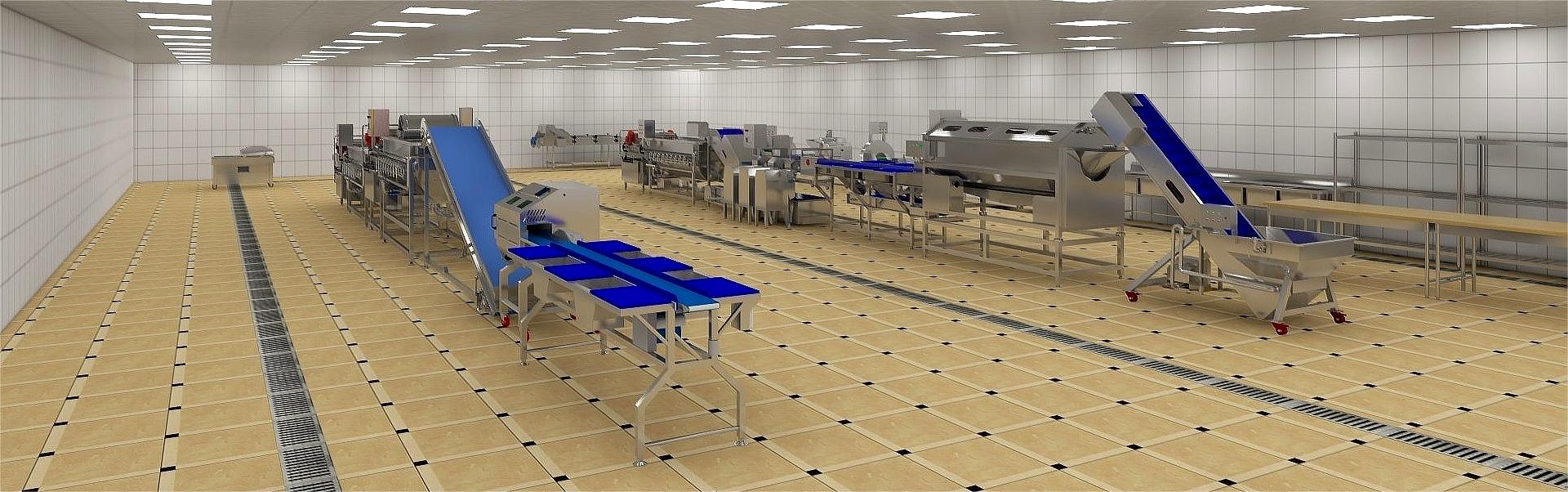
As fish processing volumes increase, manufacturers need to handle more raw materials while maintaining consistent product quality and hygiene. Manual operations can become difficult to manage when scaling, cutting, cleaning, and other repetitive tasks must be completed continuously. This is where automated Fish Processing Machinery can provide practical advantages.
Automation does not simply mean replacing workers with machines. A well-designed processing system coordinates different stages of production, reduces unnecessary handling, and helps operators maintain a more consistent workflow.
What Does Automation Mean in Fish Processing?
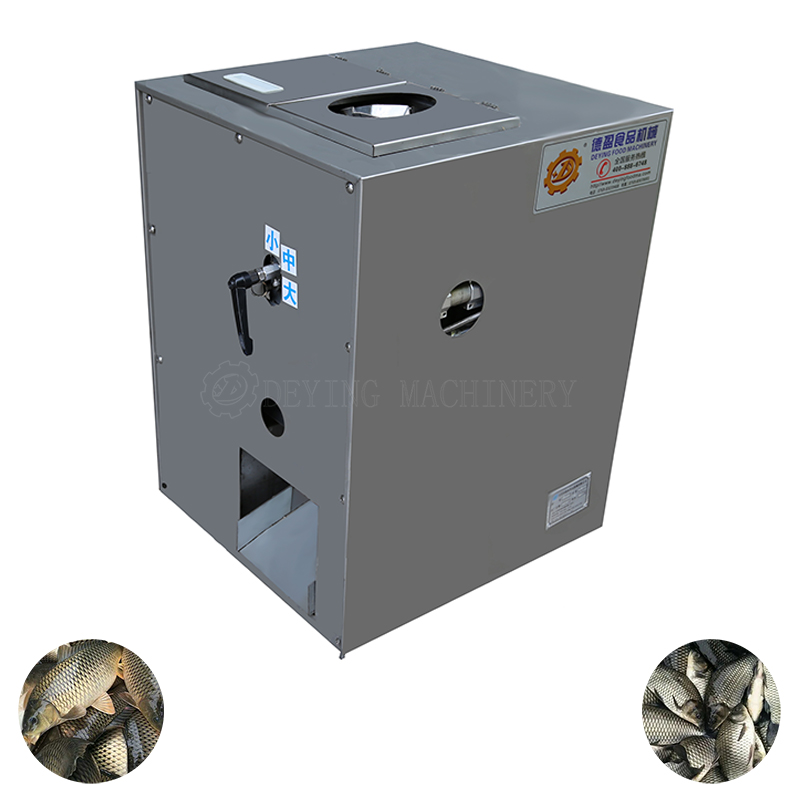
Automation in fish processing involves using mechanical and automated equipment to perform repetitive processing operations with limited manual intervention. Depending on the production line, this may include fish scaling, cutting, cleaning, conveying, drying, or other preparation processes.
The level of automation can vary. A processor may automate one specific operation with a single machine or integrate several machines into a continuous production line.
1. Reduce Repetitive Manual Operations
Fish processing involves many repetitive tasks. Scaling, cutting, sorting, and material handling can require operators to perform similar movements throughout the working day.
Automated Fish Processing Machinery can take over suitable repetitive operations, allowing workers to focus more on machine operation, quality inspection, material preparation, and production management.
This can be particularly valuable for facilities that process large quantities of fish on a regular basis.
2. Improve Processing Consistency
Manual processing can naturally vary between operators. Differences in cutting position, processing speed, or handling methods may result in variations between individual products.
Automated equipment can perform repetitive operations according to established machine settings. For example, a fish Cutting Machine can help provide more consistent cutting results when the fish size and processing requirements are suitable for the machine.
More consistent processing can make subsequent stages easier to manage and can contribute to a more uniform finished product.
3. Improve Fish Scaling Efficiency
Scaling is an important preparation step for many whole-fish processing applications. When performed manually, removing scales from large quantities of fish can require significant time and labor.
A fish scaling machine can automate this repetitive operation and help processors handle larger quantities more efficiently. The machine should be selected according to the fish species, size range, processing volume, and desired processing method.
4. Connect Different Processing Stages
Efficiency does not depend only on the speed of an individual machine. The connection between different processing stages can also have a significant impact on overall productivity.
For example, raw fish may move through several stages before becoming a finished product:
Raw material preparation
Scaling or cleaning
Cutting or portioning
Further processing
Inspection
Packaging
When equipment is properly arranged, products can move between stages with less unnecessary handling. This can help reduce production bottlenecks and improve the overall workflow.
5. Reduce Unnecessary Product Handling
Every additional manual handling step can increase the amount of time required to process the product. It can also make production management more complicated.
Automated conveyors and connected processing equipment can help move products through the production area in a more organized way. Reducing unnecessary handling can support a cleaner and more controlled processing environment.
6. Support Better Production Capacity
One of the main reasons processors consider automation is the need to increase production capacity. When demand grows, relying entirely on additional manual labor may become difficult or expensive.
Automated equipment can allow a processing facility to handle higher volumes without increasing manual operations at the same rate. However, machine capacity should always be matched with the actual production requirements and the capacity of other stages in the line.
Important: Increasing the speed of one machine does not necessarily increase the capacity of the entire production line. The complete workflow should be evaluated to identify potential bottlenecks.
7. Improve Production Hygiene
Food processing requires careful attention to hygiene and cleaning. Excessive manual handling can make it more difficult to maintain a consistent workflow.
Suitable automated fish processing equipment can reduce unnecessary direct handling of products. Equipment should also be designed and operated in a way that allows practical cleaning and routine maintenance.
For processors, automation and hygiene should therefore be considered together rather than as separate production goals.
8. Reduce Processing Waste
Efficient fish processing is not only about speed. Material utilization is also important. Inconsistent manual cutting or handling may result in unnecessary product loss.
When automated equipment is properly adjusted for the product and operating conditions, it can help standardize processing movements and reduce avoidable variation.
The actual level of material savings depends on the fish species, product design, machine configuration, and processing method.
9. Choose the Right Level of Automation
Not every fish processing facility needs a fully automated production line. The right level of automation depends on production volume, labor availability, product type, available space, and investment budget.
| Production Situation | Potential Approach |
|---|---|
| Small-scale production | Use selected machines for the most repetitive operations. |
| Growing production | Automate key bottlenecks such as scaling, cutting, or material handling. |
| Large-scale production | Consider integrating multiple machines into a coordinated processing line. |
10. Consider Maintenance When Automating
Automation can improve production efficiency, but machines also require regular maintenance. Operators should understand the maintenance requirements of each piece of equipment before integrating it into the production line.
Cutting components, moving parts, conveyors, seals, and other wear components should be inspected according to the manufacturer's recommendations. Regular cleaning is also important in a food-processing environment.
Preventive maintenance can help reduce unexpected downtime and keep automated equipment operating more consistently.
Automation for Different Fish Processing Applications
The appropriate automation strategy depends on the final product and processing requirements. A facility producing fresh fish portions may prioritize cutting and handling equipment, while another facility may need drying, canning, or further processing equipment.
This means automation should begin with the production objective rather than simply selecting the fastest available machine.
What Should You Evaluate Before Automating?
Production volume: Determine how much fish needs to be processed per hour or day.
Fish characteristics: Consider species, size, shape, and raw material condition.
Processing stages: Identify which operations require automation.
Labor requirements: Determine which manual operations create the greatest bottlenecks.
Factory layout: Make sure equipment can be arranged for an efficient material flow.
Maintenance: Consider cleaning, spare parts, servicing, and operator training.
Conclusion
Automation can improve fish processing efficiency by reducing repetitive manual operations, improving consistency, supporting higher production capacity, and reducing unnecessary product handling. Equipment such as fish processing machinery, fish Cutting machines, and fish scaling machines can be used at different stages depending on the production requirements.
The most effective approach is not simply to automate as many operations as possible. Instead, processors should identify their production goals, understand the main bottlenecks, and select equipment that works together as part of an efficient processing workflow.