What Causes Uneven Cutting in Vegetable Processing?
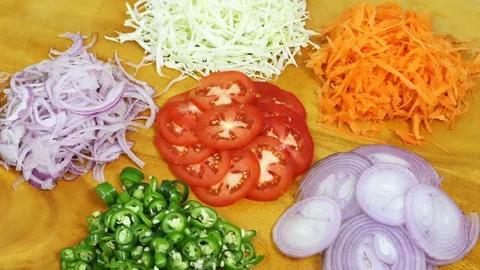
Uneven cutting is a common issue in industrial vegetable processing, particularly when a production line is required to maintain consistent slice thickness, strip width, cube size, or cutting length at high throughput.
Although uneven cuts are often attributed to blade wear, the actual cause is usually more complex. Raw material properties, feeding stability, blade geometry, cutting clearance, machine speed, and equipment synchronization all influence cutting accuracy.
For commercial Vegetable Processing Equipment, achieving consistent cutting therefore requires control of the complete cutting system rather than adjustment of a single parameter.
What Factors Determine Vegetable Cutting Accuracy?
Vegetable cutting accuracy is determined by the interaction between the raw material and the mechanical cutting system.
The most important variables include:
Vegetable diameter, length, hardness, and moisture content
Feeding orientation and feeding rate
Blade geometry and sharpness
Cutting clearance
Blade rotational or reciprocating speed
Material support during cutting
Machine alignment
Conveyor and feeding synchronization
A change in any of these parameters can affect the dimensional consistency of the finished product.
For example, a Cutting Machine processing uniform potatoes under stable feeding conditions can maintain relatively consistent dimensions. If the incoming potatoes vary significantly in diameter while all machine parameters remain unchanged, the cutting result may become less uniform.

How Does Raw Material Variation Affect Cutting Consistency?
Raw material uniformity is one of the most important factors in vegetable cutting.
Vegetables are agricultural products, so their dimensions and physical properties naturally vary. Diameter, length, curvature, firmness, moisture content, and surface condition can all change from batch to batch.
When the size distribution is too wide, the same blade configuration may produce different cutting results across the material stream.
For this reason, industrial vegetable processing may require sorting, grading, or controlled feeding before the cutting stage. More consistent raw material dimensions help stabilize the interaction between the product and the cutting mechanism.
What Causes Uneven Feeding Into a vegetable cutting machine?
Even when the cutting mechanism is correctly configured, unstable feeding can result in inconsistent dimensions.
Problems commonly occur when vegetables:
Enter the cutting zone at different orientations
Overlap during feeding
Rotate or move laterally before cutting
Are delivered at an inconsistent feed rate
Accumulate before the cutting mechanism
A stable feeding system keeps the product in a predictable position relative to the blade. This is particularly important for machines designed for continuous high-speed processing.
In an integrated production line, the upstream conveyor should therefore be matched to the capacity and feeding requirements of the vegetable Cutting machine.
How Does Blade Geometry Affect Cutting Quality?
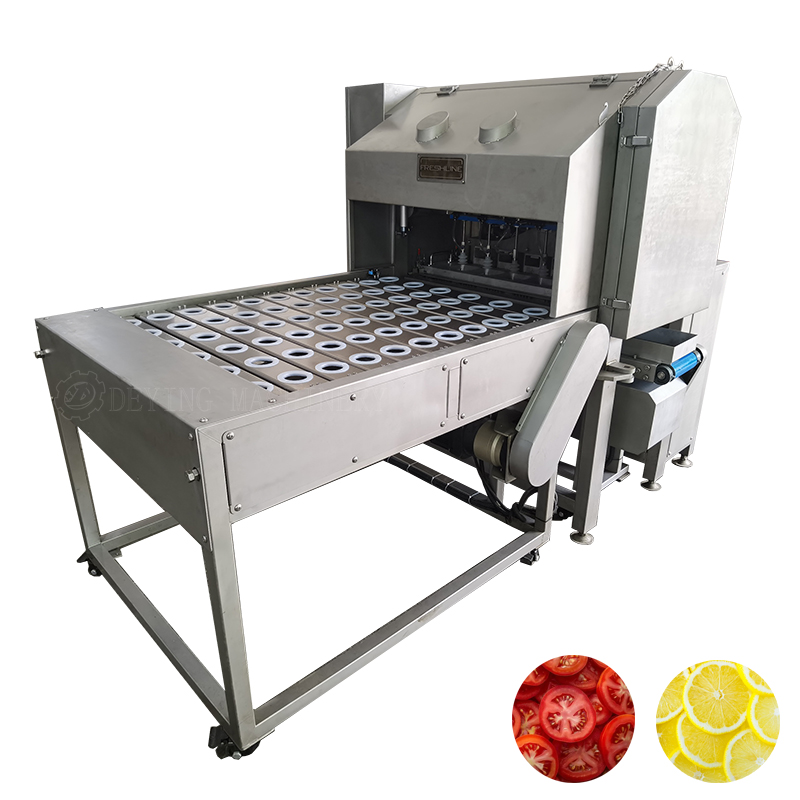
Blade geometry determines how cutting force is applied to the vegetable.
Blade angle, thickness, edge profile, blade spacing, and cutting arrangement all influence penetration resistance and product deformation.
A poorly matched blade configuration can increase compression before separation occurs. Instead of producing a clean cut, the vegetable may deform, split, or fracture.
The appropriate blade geometry depends on the processed material and required finished dimensions. A configuration suitable for firm root vegetables may not provide the same performance when processing delicate leafy vegetables.
What Happens When the Cutting Blade Becomes Dull?
Blade wear gradually changes the cutting mechanism.
As the cutting edge becomes dull, the force required to penetrate the vegetable increases. Instead of producing a clean shearing action, the blade may compress the material before separation.
Typical symptoms include:
Irregular cutting dimensions
Crushed or deformed edges
Increased product breakage
Greater cutting resistance
Increased waste
Higher machine load
For continuous production, blade condition should therefore be monitored as part of routine equipment maintenance.
How Does Blade Clearance Affect Cutting Accuracy?
Blade clearance refers to the working gap between interacting cutting components. It is particularly important in systems where a rotating blade works against a fixed blade, grid, or supporting surface.
If the clearance is excessive, the material may move or deform before complete separation. If the clearance is too small, friction and mechanical resistance may increase, potentially accelerating blade wear.
The optimum clearance depends on the cutting mechanism, material characteristics, and required product dimensions. It should therefore be established according to the machine's mechanical design rather than adjusted arbitrarily.
How Does Cutting Speed Affect Vegetable Size Consistency?
Cutting speed needs to be considered together with feeding speed.
Increasing blade speed can increase theoretical throughput, but higher speed does not automatically produce better cutting accuracy. If the feed rate, material positioning, and blade engagement are not synchronized, the increased speed may actually increase dimensional variation.
For a continuous vegetable processing system, a stable relationship should be maintained between:
Feed Rate → Material Positioning → Blade Speed → Cutting Frequency → Output Rate
This is one reason why machine capacity should not be evaluated only by maximum blade speed or theoretical production output.
What Role Does Vegetable Moisture and Firmness Play?
Vegetable mechanical properties can change significantly according to variety, maturity, storage conditions, and processing temperature.
Higher moisture content, softer tissue, or lower firmness can increase deformation during cutting. Conversely, firmer materials may require greater cutting force.
These changes can influence the relationship between blade pressure and material deformation. A cutting machine that performs consistently with one batch may therefore require parameter optimization when processing a different vegetable variety or raw material condition.
How Does Conveyor Synchronization Affect Cutting Accuracy?
In an automated vegetable processing line, the cutting machine does not operate independently.
The upstream conveyor determines how quickly and how consistently raw materials reach the cutting zone. If conveyor speed is unstable, the cutting machine may experience fluctuations in material loading.
Deying provides food processing conveyor equipment for transferring food materials between different processing stages. Proper conveyor integration can help maintain a stable feed rate and reduce material accumulation before cutting.
The downstream conveying system should also be considered because sudden changes in transfer speed can create product accumulation or uneven discharge.
How Can Cutting Accuracy Be Improved in Industrial Vegetable Processing?
Improving cutting consistency requires a system-level approach.
First, raw materials should be graded or sorted when dimensional variation is significant. Second, the feeding mechanism should provide stable positioning and flow. Third, blade geometry, sharpness, and clearance should be matched to the specific vegetable and target cut size.
Machine speed should then be adjusted according to actual material throughput rather than simply operating at the highest available speed.
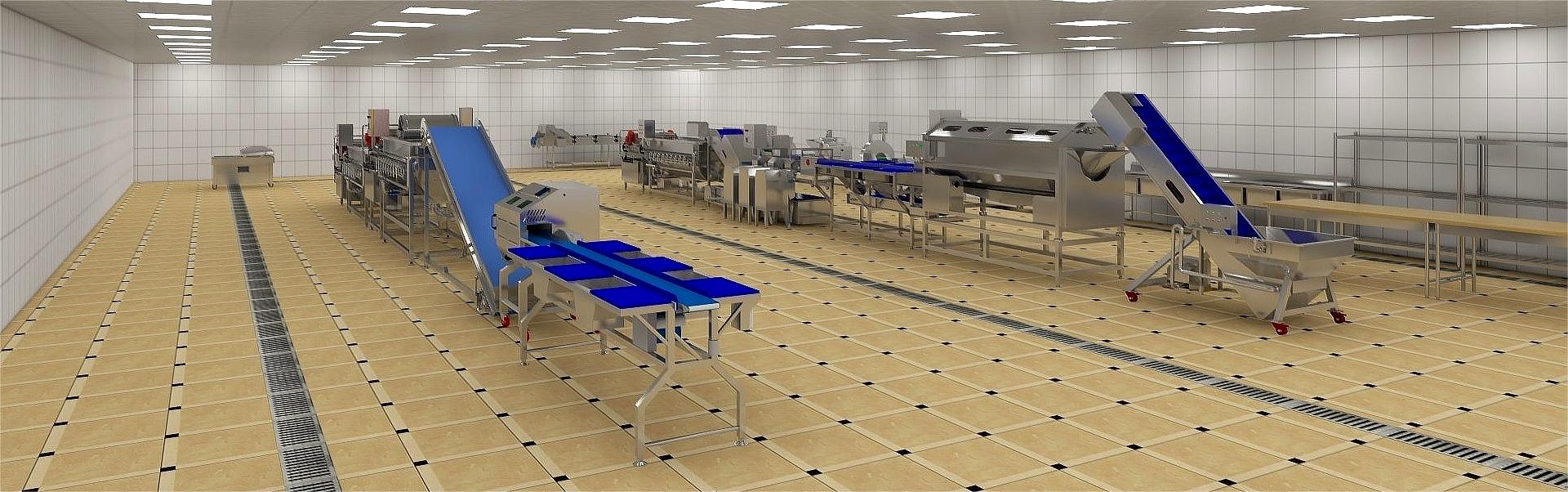
For a complete processing system, the cutting stage should also be synchronized with washing, conveying, drying, and packaging equipment.
What Should Be Evaluated Before Selecting Vegetable Cutting Equipment?
For commercial applications, equipment selection should begin with the required finished product rather than the machine itself.
Key technical requirements include:
Raw Material: Vegetable type, dimensions, hardness, and moisture content.
Cutting Specification: Slice thickness, strip width, cube dimensions, or required cutting length.
Capacity: Required hourly throughput and expected production variation.
Cutting Mechanism: Rotary, disc, blade, grid, or other mechanical configuration.
Feeding Method: Manual, conveyor-fed, hopper-fed, or automated feeding.
Product Integrity: Acceptable level of deformation, breakage, and cutting loss.
Integration: Compatibility with upstream washing and downstream conveying, drying, and packaging equipment.
For larger applications, these factors should be considered during the design of the complete vegetable processing solution, rather than selecting each machine separately.
How Does Proper Cutting Control Improve the Overall Processing Line?
Consistent cutting is not only a matter of appearance. Uniform vegetable dimensions can improve subsequent processing performance.
For example, pieces with similar dimensions tend to provide more consistent:
Washing and cleaning
Blanching or cooking
Drying
Freezing
Seasoning
Packaging
When cutting dimensions vary significantly, smaller pieces may be overprocessed while larger pieces remain insufficiently processed. Therefore, cutting accuracy can directly influence the efficiency and consistency of downstream operations.
For commercial food manufacturers, the objective is not simply to achieve a high cutting speed, but to establish a stable relationship between raw material characteristics, cutting parameters, machine capacity, and downstream processing requirements.
That is the key to maintaining consistent vegetable cutting quality in an industrial processing environment.