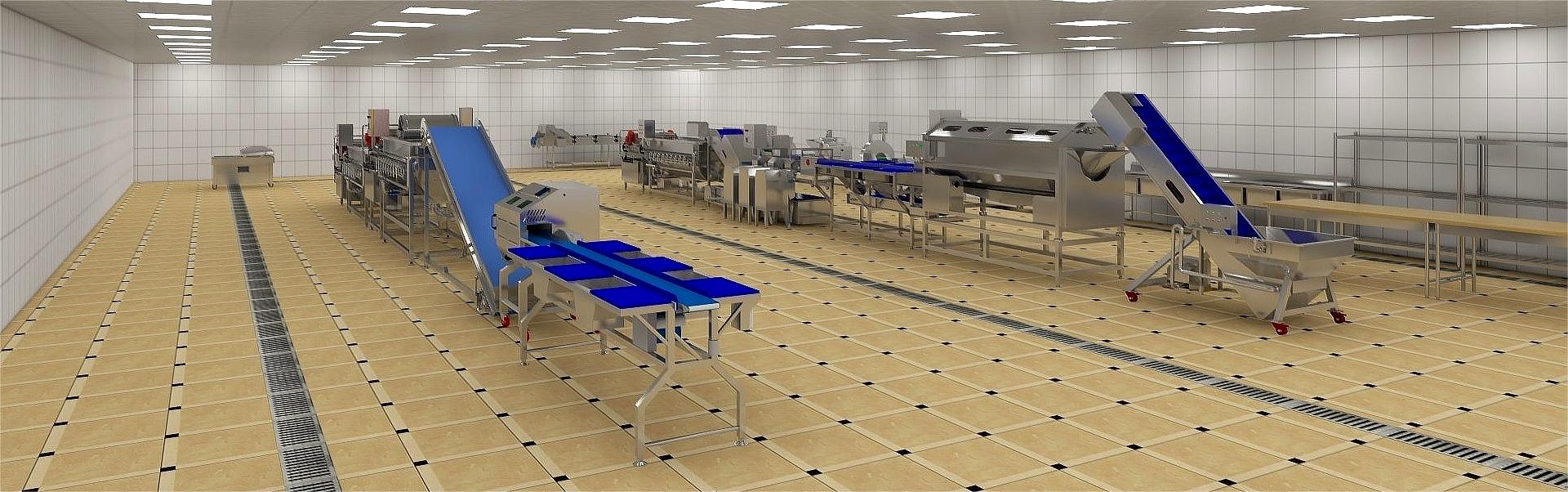
Vegetable processing involves much more than simply cutting and washing vegetables. Depending on the raw material and final product, a commercial processing operation may require washing, peeling, cutting, drying, conveying, and packaging equipment.
For food processing companies, restaurants, central kitchens, and large-scale food manufacturers, selecting the right Vegetable Processing Equipment can improve production efficiency while reducing manual labor and maintaining consistent processing quality.
Deying Food Machinery provides a range of food processing machines and complete processing solutions for vegetables, fruits, meat, fish, and other food products.
Vegetable Washing and Cleaning Equipment
Washing is often the first major step in vegetable processing. Soil, sand, leaves, and other impurities need to be removed before cutting or further processing.
A Bubble Cleaning Machine can be used for continuous washing of vegetables and other food materials. Air bubbles combined with water movement help loosen dirt and impurities while reducing excessive mechanical handling.
The Bubble Cleaning Machine can be integrated into different food processing workflows and is suitable for applications requiring efficient continuous cleaning.
For larger processing facilities, washing equipment can also be connected with conveyors and subsequent processing machines to create a more continuous production process.
Vegetable Cutting and Processing
After washing, vegetables may need to be cut according to the final product requirements. Different applications may require slicing, dicing, shredding, or other cutting methods.
A complete vegetable processing system can connect washing and cutting equipment with conveying systems, helping move raw materials from one processing stage to the next while reducing manual handling.
Deying also provides different Food Processing Conveying Equipment for transferring vegetables and other food materials between machines.
For processing plants with higher production volumes, automated conveying can be particularly useful because it helps maintain a stable material flow through the production line.
Potato Processing Equipment
Potatoes require a different processing approach from leafy vegetables. Commercial potato processing normally involves cleaning, peeling, cutting, and sometimes blanching or drying.
For businesses processing large quantities of potatoes, an integrated Potato Processing Line can combine multiple stages into a more efficient workflow.
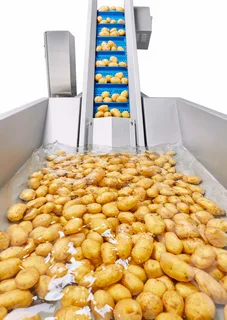
A typical potato processing process may include:
Cleaning → Peeling → Inspection → Cutting → Washing → Drying → Packaging
The exact configuration depends on the required production capacity and final potato products.
This type of integrated solution can reduce the amount of manual transfer between individual machines while making production easier to manage.
Conveying Systems for Food Processing
Conveying is another important part of vegetable processing that is sometimes overlooked.
After washing, cutting, or drying, vegetables need to be transported safely to the next processing stage. Proper conveying equipment can help maintain production continuity and reduce unnecessary manual handling.
Deying provides different Food Processing Conveyor Systems for different production requirements. Conveyor systems can be configured according to processing capacity, machine layout, and available factory space.
For a complete food processing plant, the conveyor should not be considered as an isolated machine. It should be designed together with washing, cutting, drying, and packaging equipment.
From Vegetable Processing to Other Food Applications
Although washing and conveying equipment are widely used for vegetables, similar processing principles are also applied to meat, fish, seafood, and other food products.
For example, fish processing requires specialized equipment for scaling, cutting, cleaning, and further preparation. Deying's Fish Processing Machine is designed for commercial fish processing applications.
Seafood processors can also use dedicated equipment such as the Commercial Shrimp Peeling Machine to improve peeling efficiency and reduce manual processing.
These applications demonstrate why modern food processing factories often need a combination of specialized machines rather than relying on a single piece of equipment.
Crate and Container Cleaning
Hygiene management is also an important part of modern food processing.
Reusable plastic crates and turnover boxes are widely used for transporting raw vegetables, prepared food, meat, seafood, and other products. Keeping these containers clean helps maintain a suitable production environment.
A Crate Washing Machine can automatically clean reusable crates and containers, reducing manual cleaning work and improving cleaning consistency.
This type of equipment can be particularly valuable for central kitchens, food distribution centers, vegetable processing plants, and other facilities handling large numbers of reusable containers.
Choosing the Right Vegetable Processing Equipment
The best vegetable processing equipment depends on several factors:
Raw Material: Different vegetables have different requirements for washing, peeling, and cutting.
Production Capacity: Small processors may only need individual machines, while larger facilities may require a complete production line.
Final Product: Fresh-cut vegetables, frozen vegetables, prepared vegetables, and other products may require different processing stages.
Automation Level: Automated equipment can reduce labor requirements and provide more consistent production.
Factory Layout: Conveyors and processing machines should be arranged according to the available production space and workflow.
Complete Food Processing Solutions
Modern food processing plants increasingly require integrated solutions rather than individual machines working independently.
A typical vegetable processing workflow can include:
Washing → Cutting → Conveying → Drying → Inspection → Packaging
For potato products, peeling and additional processing equipment may be added. For fish and seafood, dedicated processing equipment is required. Crate cleaning systems can also be integrated into the overall hygiene management process.
Deying Food Machinery provides individual processing machines as well as complete processing solutions for vegetables, potatoes, fruits, fish, seafood, and other food products.
For more information about food processing equipment and customized production solutions, visit the Deying Food Machinery website.