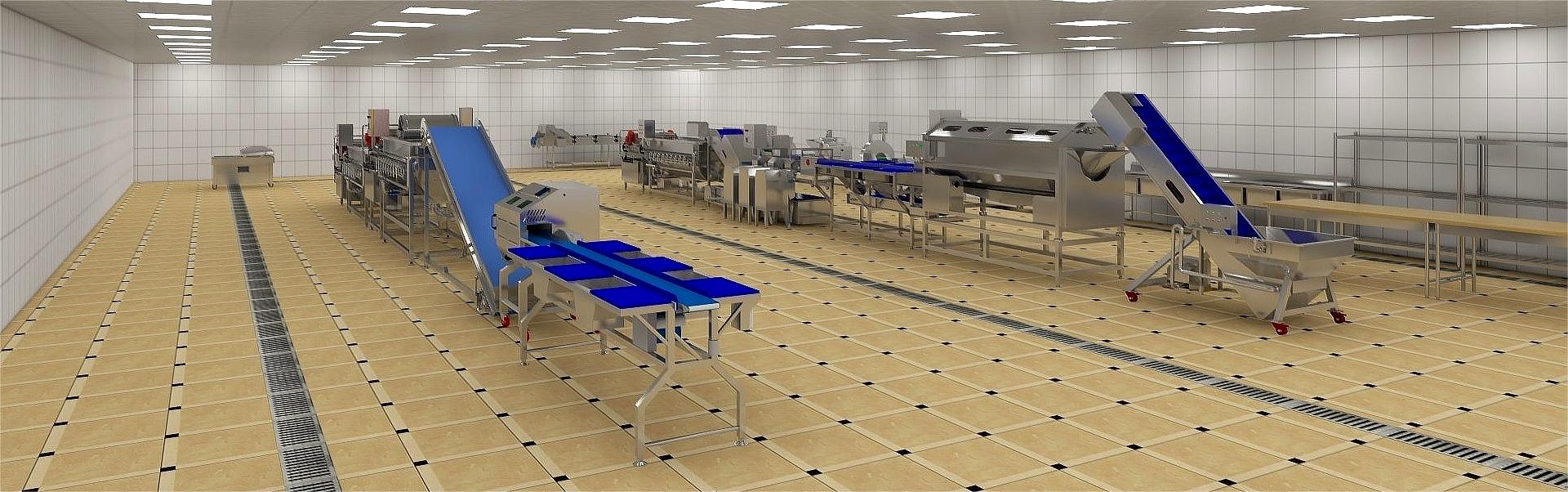
How Does a Vegetable Processing Line Work? From Washing and Cutting to Packaging
With the increasing demand for fresh-cut vegetables and ready-to-eat food products, food manufacturers are investing in advanced automation solutions to improve production efficiency and maintain consistent product quality. A vegetable processing line provides a complete solution for commercial vegetable handling, including washing, cutting, drying, sorting, and packaging.
But how does a vegetable processing line work? By integrating multiple types of Vegetable Processing Equipment, an automatic vegetable processing line can complete the entire production process from raw vegetable feeding to finished packaged products with higher efficiency and better hygiene control.
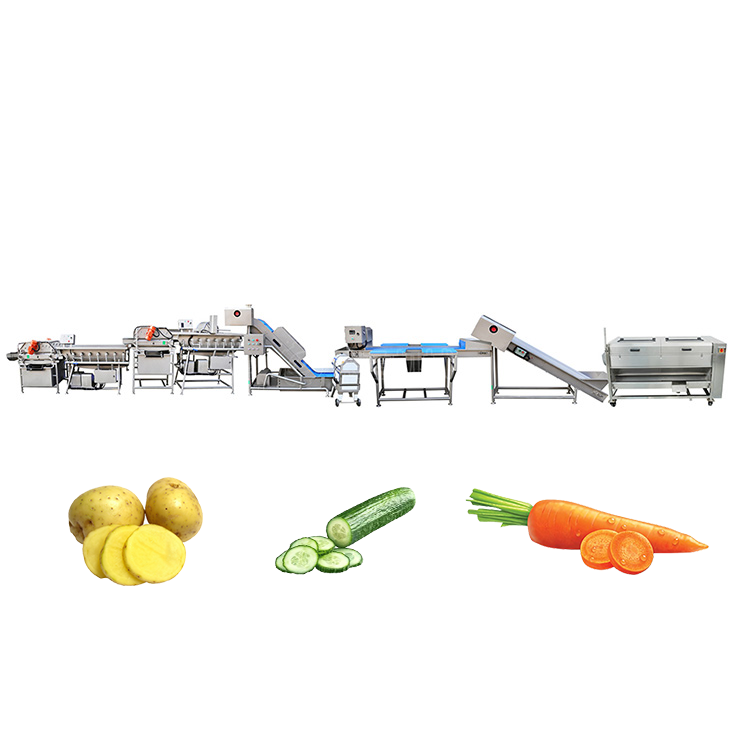
What Is a Vegetable Processing Line?
A vegetable processing line is an automated production system designed to process different types of vegetables for commercial food manufacturing. It combines multiple machines to perform cleaning, trimming, cutting, washing, dehydration, and packaging operations.
Compared with traditional manual processing methods, an automatic vegetable processing line reduces labor costs, improves processing speed, and ensures stable product quality for large-scale production.
How Does a Vegetable Processing Line Work?
The working principle of a vegetable processing line is based on continuous automated processing. Different machines are connected through conveyor systems, allowing vegetables to move smoothly from one processing stage to another.
The complete process usually includes raw material sorting, vegetable cutting, washing, sterilization, dehydration, drying, and packaging.
1. Raw Vegetable Feeding and Sorting
The first step of the vegetable processing line is feeding and sorting. Fresh vegetables are placed onto the conveyor system and transported into the processing area.
During this stage, workers or automatic sorting systems remove damaged vegetables, foreign materials, and unwanted parts to ensure only suitable raw materials enter the next process.
2. Vegetable Cutting Process
After sorting, vegetables are transferred to a vegetable Cutting Machine. According to different product requirements, the machine can perform slicing, shredding, dicing, or other cutting operations.
Automatic cutting ensures consistent vegetable sizes, improves production efficiency, and provides better appearance for final products.
3. Vegetable Washing Process
The washing process is one of the most important stages in a vegetable processing line. After cutting, vegetables enter a vegetable washing machine where dirt, dust, and surface impurities are removed.
Modern vegetable washing equipment usually uses water circulation, bubble cleaning, and spraying technology to achieve effective cleaning while reducing water consumption.
4. Sterilization and Cleaning Control
For food manufacturers requiring higher hygiene standards, additional sterilization systems can be integrated into the processing line.
This process helps reduce microorganisms and improves food safety, especially for fresh-cut vegetables and ready-to-eat products.
5. Vegetable Dehydration and Drying
After washing, vegetables contain excess surface moisture. The dehydration process removes additional water before packaging.
A Vegetable Dehydration Machine uses centrifugal force or air drying technology to improve drying efficiency and prevent quality problems caused by excessive moisture.
6. Packaging Process
The final stage of a vegetable processing line is packaging. After vegetables are cleaned and dried, they can be packed using different packaging methods according to customer requirements.
Combining a vegetable processing line with a food packing machine creates a complete automated solution from raw vegetables to finished products.
Main Equipment Used in Vegetable Processing Line
| Equipment | Main Function |
|---|---|
| Conveyor System | Transfers vegetables between different processing stages |
| vegetable cutting machine | Slicing, shredding, and cutting vegetables |
| Vegetable Washing Machine | Removes dirt and impurities from vegetables |
| Dehydration Machine | Removes excess moisture after washing |
| Packaging Machine | Packages processed vegetables for storage and transportation |
Advantages of Automatic Vegetable Processing Line
Higher Production Efficiency
An automatic vegetable processing line allows continuous operation and significantly increases production capacity compared with manual processing.
Consistent Product Quality
Automated cutting, washing, and drying processes ensure stable product quality and reduce variations caused by manual operation.
Improved Food Safety
Integrated cleaning and sterilization processes help maintain higher hygiene standards throughout vegetable production.
Reduced Labor Costs
By automating multiple processing steps, manufacturers can reduce labor requirements and improve overall production efficiency.
Applications of Vegetable Processing Line
A vegetable processing line is widely used in various food production industries, including:
Fresh-cut vegetable factories
Central kitchen production
Frozen vegetable processing plants
Ready-to-eat food manufacturers
Supermarket vegetable suppliers
Agricultural product processing companies
Why Choose an Automatic Vegetable Processing Line?
For modern food manufacturers, automation is essential for improving production efficiency and maintaining competitive advantages. An automatic vegetable processing line provides a complete solution by integrating washing, cutting, drying, and packaging processes into one continuous system.
Professional food processing equipment manufacturers can customize processing solutions according to vegetable types, production capacity, factory layout, and specific product requirements.
Conclusion
So, how does a vegetable processing line work? The process starts with raw vegetable feeding and sorting, followed by cutting, washing, sterilization, dehydration, drying, and packaging. Through automated equipment integration, manufacturers can achieve efficient, hygienic, and consistent vegetable production.
For companies looking to improve vegetable processing efficiency, an automatic vegetable processing line provides a reliable solution for large-scale food production.