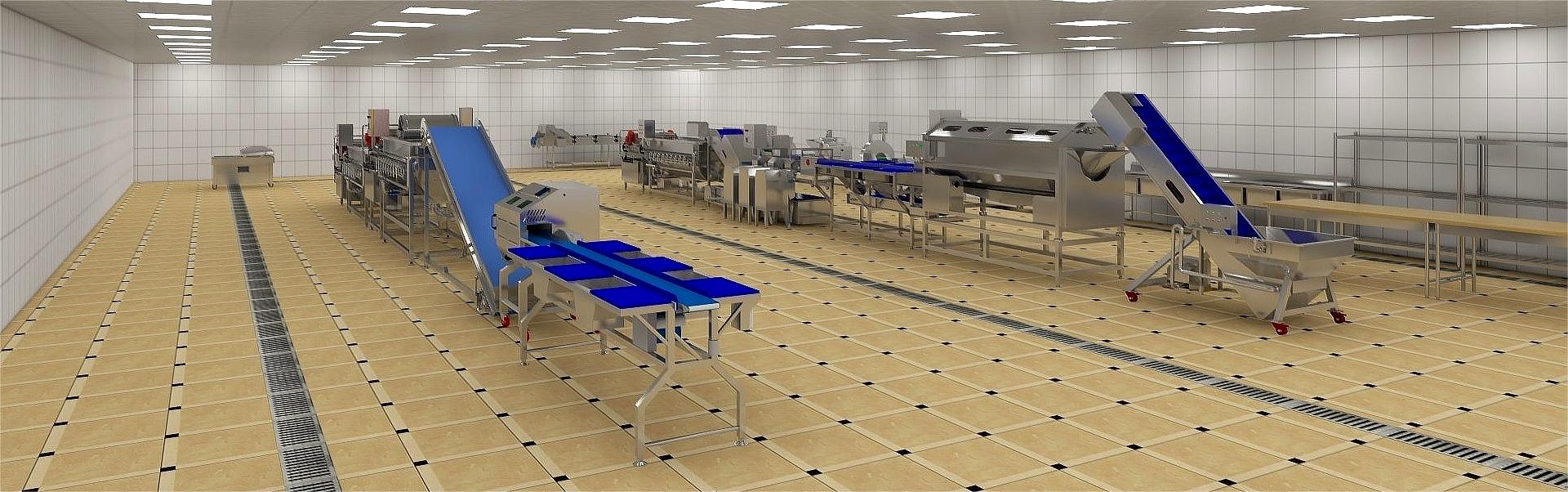
In the modern food industry, maintaining high product quality, extending shelf life, and reducing production costs are top priorities for manufacturers. As frozen food, canned vegetables, and ready-to-cook meals gain popularity, companies increasingly rely on advanced Blanching and Cooling Lines to achieve consistent results and meet stringent safety standards.
What Is a Blanching and Cooling Line?
A Vegetable Blanching Machine integrates controlled heating and rapid cooling in a continuous process. Blanching inactivates enzymes that can cause discoloration, loss of flavor, and nutrient degradation. The cooling stage immediately stops cooking, preserving the natural color, texture, and nutritional value of vegetables. Modern systems feature stainless-steel construction, automatic temperature control, and adjustable conveyor speeds, which optimize efficiency and ensure consistent product quality.
Key Benefits of Modern Blanching and Cooling Lines
Consistent Quality: Automated control ensures uniform blanching and cooling, reducing product defects.
Energy Efficiency: Advanced heat exchange systems and steam circulation minimize energy consumption.
Hygienic Design: Stainless-steel construction meets strict food safety standards.
High Productivity: Continuous processing allows higher throughput compared to batch systems.
Material Flexibility: Suitable for leafy vegetables, root vegetables, fruits, and mixed vegetable products.
Applications Across the Food Industry
Blanching and cooling systems are widely used in frozen vegetable plants, canned food factories, and ready-to-cook meal production lines. They are particularly beneficial for vegetables that are sensitive to enzymatic degradation, such as broccoli, spinach, green beans, and carrots.
Advanced Application Table
| Vegetable | Blanching Purpose | Cooling Benefit | Typical Processing Time |
|---|---|---|---|
| Broccoli | Enzyme Inactivation | Maintains Vibrant Green Color | 2–3 min |
| Spinach | Pre-Freezing Treatment | Improved Texture and Quality | 1–2 min |
| Carrot Slices | Surface Sterilization | Reduced Microbial Load | 3–4 min |
| Green Beans | Color Preservation | Uniform Appearance | 2–3 min |
| Mixed Vegetables | Continuous Processing | High Throughput | Varies by product |
Industry Trends Driving Adoption
Automation & Labor Savings: Automated lines reduce manual handling and labor costs.
Food Safety Compliance: Continuous processing minimizes contamination risk.
Energy Optimization: Heat recovery systems and water recycling reduce utility costs.
High-Volume Production: Continuous lines allow factories to scale without sacrificing quality.
FAQ: Blanching and Cooling Lines
Q1: What types of vegetables can be processed?
A1: Leafy greens, root vegetables, beans, carrots, onions, garlic, and mixed frozen vegetable products.
Q2: Can the line be customized for different production capacities?
A2: Yes, modern systems support adjustable conveyor speeds, varying blanching times, and multi-stage cooling for flexibility.
Q3: How does the blanching and cooling process affect nutritional value?
A3: Rapid cooling after blanching preserves vitamins, color, and texture, maintaining high-quality standards for frozen and canned vegetables.
Q4: What materials are used for construction?
A4: High-grade stainless steel (304/316) ensures hygiene, durability, and compliance with food safety regulations.
Q5: How does it save energy compared to traditional batch blanching?
A5: Continuous heat exchange, optimized water circulation, and energy recovery systems reduce steam and water consumption.
Conclusion
Upgrading to a modern blanching and cooling line offers food manufacturers a strategic advantage by improving product consistency, enhancing food safety, and increasing operational efficiency. As global demand for frozen and ready-to-cook vegetables grows in 2026, investing in automated and high-precision processing equipment becomes a key factor for competitive success.