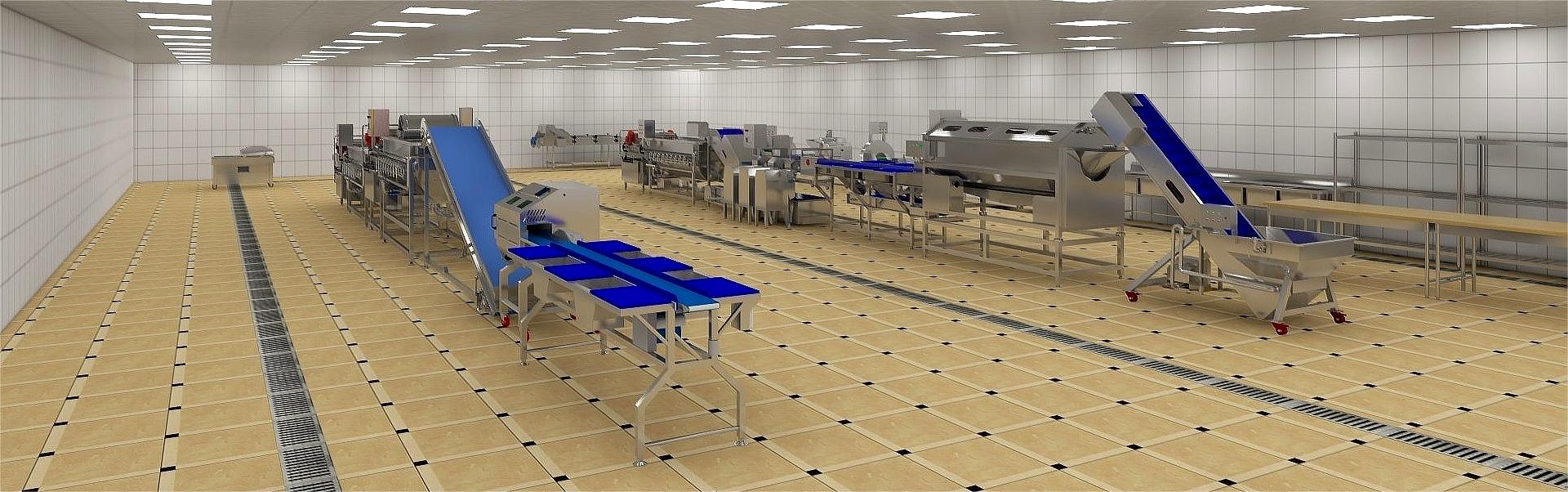
In modern food processing factories, automation has become essential for improving production efficiency and maintaining consistent product quality. Equipment such as the industrial stir fry machine plays a key role in central kitchens, seasoning factories, and large-scale ready-meal production lines. Compared with traditional manual cooking, automated systems significantly reduce labor intensity while ensuring stable taste and texture.
The Rotating Stir Fry Machine is designed to simulate manual wok cooking through controlled mechanical rotation and intelligent heating systems. It ensures ingredients are evenly mixed and heated, avoiding sticking, burning, or uneven cooking. This makes it suitable for processing vegetables, meat fillings, sauces, and complex seasoning mixtures.
A modern automatic wok cooking machine typically uses stainless steel construction, with gas or electric heating options. The tilting discharge design allows easy unloading of finished products, improving workflow efficiency in continuous production environments. Operators can adjust rotation speed, temperature, and cooking time depending on different recipes.
In a continuous stir fry production line, the machine can be integrated with feeding conveyors, seasoning dosing systems, and cooling or packaging equipment. This creates a fully automated workflow from raw material input to final output, improving productivity and reducing operational costs.
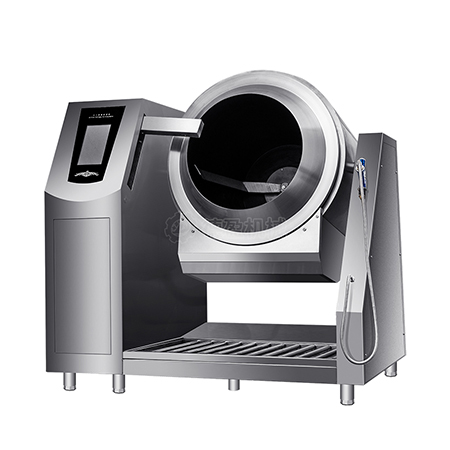
| Item | Description |
|---|---|
| Equipment Name | Rotating Stir Fry Machine |
| Application | Central kitchen, food processing plant, seasoning production |
| Heating Method | Gas heating / Electric heating (customizable) |
| Main Function | Automatic stir-frying, mixing, heating, and cooking |
| Material | Food-grade stainless steel |
| Production Mode | Batch or continuous production line integration |
The advantage of this system lies in its stability and scalability. Compared with manual cooking, the industrial stir fry machine ensures uniform heat distribution and consistent output quality. It also reduces human error and improves hygiene standards, which is critical in modern food factories.
In addition, the machine is designed for easy cleaning and maintenance. The stainless steel structure ensures durability and compliance with food safety standards. This makes it suitable for long-term continuous operation in industrial environments.
Overall, integrating a rotating stir fry machine into a production system is a practical solution for companies aiming to upgrade toward automated food manufacturing. It enhances efficiency, reduces cost, and ensures consistent product quality across large-scale production.